

In Celebration of Neil’s 80th Birthday: His Ten Best Records
No other rock musician has been more prolific over the past sixty years than Neil Young, who turns eighty in November. Young has put out forty-three studio albums since 1968 in addition to being a part of Buffalo Springfield, Crosby, Stills, Nash and Young, and the Stills-Young Band. He’s also released eleven live albums and offered deep dives into his vault via three 10+ CD Archives boxes that only go through 1987. Famous for a “first take is the best take” approach and a dedication to following his muse regardless of the damage left in its wake, Young has used numerous backing bands. Crazy Horse is the best-known, but Young has also recorded with Booker T and the MGs, Pearl Jam, the Trans Band, Promise of the Real, and most recently the Chrome Hearts.
To describe Young’s output as intimidating is an understatement. I’ve devoted two blogs in the past to his buried treasures. To honor a musician who’s surely earned a spot on the Mount Rushmore of classic rock, here are his ten best studio releases in reverse order.
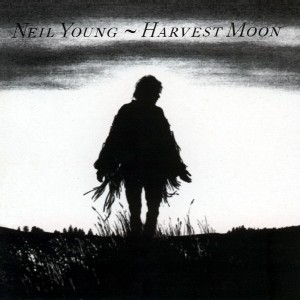 10) Harvest Moon (1992)
Love him or hate him, Neil Young’s aversion to standing still can be frustrating for fans and fellow musicians; in 1975 he abandoned the only Stills-Young Band tour halfway through because he wasn’t feeling it. In the early nineties he pivoted away from the grunge movement he helped spawn to return to his folk roots with this collection of softer numbers. Bringing back Linda Ronstadt, James Taylor and Nicolette Larson for vocal support for the first time in over a decade, Harvest Moon helped him reconnect with fans scared off by years of extended, often distortion-drenched material. The album welcomes like a warm embrace born from hard-won experience: opener “Unknown Legend” paints lost youth in mythical terms, “From Hank to Hendrix” grasps at the embers in the last days of a long-term companionship, and the title track might just be the most inviting song he’s penned, an elegant waltz celebrating deep love and romance.
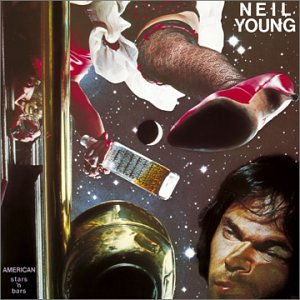 9) American Stars N’ Bars (1977)
Young’s penchant for changing his mind mid-production has resulted in many LPs cobbled together from disparate sessions and parts, and he has abandoned countless albums. His decision to not put out Homegrown was so last-minute that it famously required buying back copies that were ready to be shipped to stores (he ultimately released the album in 2020). American Stars n’ Bars, whose cover was designed by actor Dean Stockwell, is the best example of this approach to making records. Side one contains deliberately sloppy but infectious tracks like “Hold Back The Tears” and “Bite the Bullet” with backing vocals by Linda Ronstadt and Nicolette Larson, and “Saddle Up The Palomino” starts with Ronstadt’s laughter. Side two features “Like a Hurricane,” one of his most beloved songs, alongside the beautiful if brief “Star of Bethlehem” with harmony by Emmylou Harris. It also includes “Will to Love,” perhaps the weirdest thing he’s ever recorded, which equates the search for love and meaning with a fish struggling upstream sung to a crackling fireplace. Whether the track succeeds or not is debatable, but it’s certainly unforgettable.
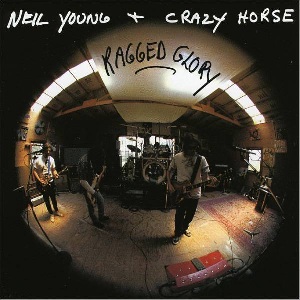 8) Ragged Glory (1990)
Young embraced a grunge ethos early on in his career; “Cinnamon Girl” might be the first grunge song, and a garage-focused spirit has always been intrinsic to his harder rock. His well-deserved rep as the Godfather of Grunge dates largely to Ragged Glory and Freedom, the 1989 album that preceded it, both featuring Crazy Horse. Nirvana and likeminded Seattle artists exploded in the years immediately after the two LPs, and Kurt Cobain, Eddie Vedder and others credited Young with inspiration. After wandering through a musical desert in the eighties with a number of failed genre exercises, he rediscovered his original drive here. “F*!#in’ Up,” “Love to Burn” and “Love and Only Love” feature shredding, barbed guitar solos, while “Mansion on the Hill” marries psychedelic optimism to grunge’s metal urgency.
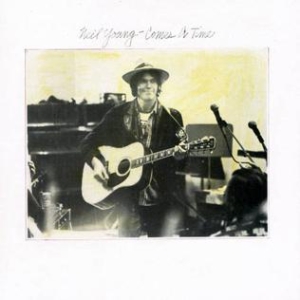 7) Comes a Time (1978)
Neil’s music is easily categorized as hard or soft. In the case of Rust Never Sleeps, he literally divides the album in half with acoustic songs on one side and rocking numbers on the other. Like Harvest Moon, Comes a Time stands apart from most of his discography in its presentation of nothing but the folk side (with one exception, “Motorcycle Mama”). It works because it includes some of his best material and the harmonies of frequent late seventies contributor Nicolette Larson, who had her biggest hit with a cover of its “Lotta Love.” From wistful opener “Goin’ Back” through the evocative longing of “Peace of Mind” to the singalong title track and the nostalgic departing sentiment of closer “Four Strong Winds,” this album is a home run if you prefer Neil’s gentler sound.
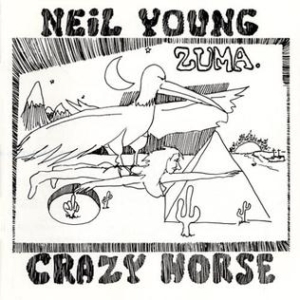 6) Zuma (1975)
Young’s first post-Ditch-Trilogy release reunites him with Crazy Horse and finds him slightly more accessible, although the darkness is always just a shot away. His more tender side is reflected in “Pardon My Heart” and “Through My Sails,” the latter with harmonies by Crosby, Stills and Nash, although “Drive Back” hints at the punk fury to come in Rust Never Sleeps. The album’s highlights are the long, slow jams of “Danger Bird” and “Cortez the Killer.” The latter quickly became a crowd favorite as it recalled the extended improvisational spirit of “Down By The River” alongside iconic lyrics that romanticize the Aztec civilization as it thrived before the Cortes armada wreaked death and destruction in the sixteenth century.
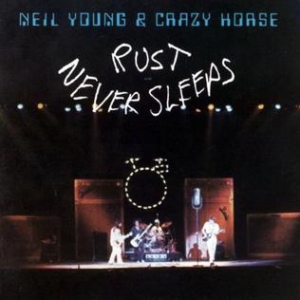 5) Rust Never Sleeps (1979)
By the late seventies punk and new wave ruled the airwaves. Young’s timely response was this half-acoustic, half-electric record that tapped into punk’s popularity while still containing some of his prettiest folk compositions. “Thrasher” is one of Neil’s most personal songs with its confession of his motivation for leaving others in the lurch in pursuit of his muse. “Pocahontas” describes man’s departure from nature and the resulting loss, while “Sail Away” is a touching love song. The electric side kicks off with arguably Neil’s finest hour, “Powderfinger,” a tale of a young man painfully discovering the horrors of war that includes the classic phrase “Numbers add up to nothing.” Elsewhere he sews the seeds of his Godfather of Grunge status with the loud, angry “Sedan Delivery” and “Welfare Mothers” before concluding with the epic “My My, Hey Hey (Into the Black)” featuring one of his best-known lyrics, “It’s better to burn out than to fade away.”
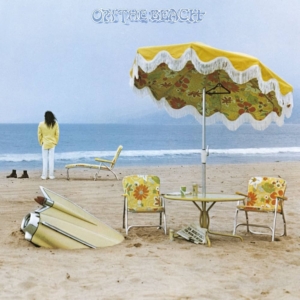 4) On The Beach (1974)
Neil Young’s response to the stardom that resulted from Harvest was his “Ditch Trilogy” of Time Fades Away, Tonight’s The Night and On The Beach, so-called because he claimed to be deliberately driving his notoriety into the ditch. The third album is the best and most inviting of the three. Kicking off with the minor hit “Walk On,” the first half features the keyboard- and pedal-steel-centered “See The Sky About to Rain,” the stripped-down banjo of “For The Turnstiles” and the driving “Revolution Blues.” The second half takes a more meditative turn with the deep blues of the title track followed by “Motion Pictures,” an elegy to then-wife actress Carrie Snodgrass, and the nine-minute-long, mostly solo “Ambulance Blues.” The title track contains one of my favorite Neil lines: “Though my problems are meaningless, that don’t make them go away.”
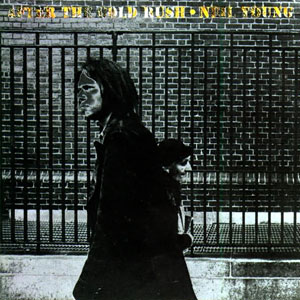 3) After the Gold Rush (1970)
Young’s third album eschewed the longer jams of Everybody Knows This is Nowhere; its longest and best-known track, “Southern Man,” clocks in at only six minutes. Instead it focuses more on the lush harmonies Young was exploring with Crosby, Stills, Nash and Young, even if only Stills from that group contributes here. “Tell Me Why,” “Birds” and “I Believe in You” all would’ve fit comfortably on any CSNY release. The record also include three meta Young tracks that marry his sadder instincts to that high, mournful tenor: “Only Love Can Break Your Heart,” “Don’t Let it Bring You Down” and a cover of Don Gibson’s country hit “Oh Lonesome Me.” By turns angry, sad and hopeful, After the Gold Rush helped Young find a wider audience even as it leaned into elements that led detractors to describe him as relentlessly depressing.
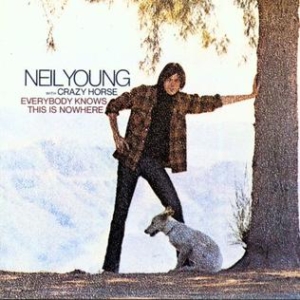 2) Everybody Knows This is Nowhere (1969)
By the time Young’s sophomore album came out, he had already achieved stardom through Buffalo Springfield. His eponymous debut is a logical extension of his Springfield work, but it is Everybody Knows This is Nowhere where he demonstrates surprising new range and the more improvisational aesthetic that would fuel his best work. “Down By The River” and “Cowgirl in the Sand”–two nine-plus minute tracks with extended, spirited guitar shredding–were both composed the same day as opener “Cinnamon Girl,” when he was tapping into a creative streak spurred by a 103 degree fever. The album also has its mellower side in the heartbreak of “The Losing End (When You’re On)” and the haunting “Round and Round (It Won’t Be Long).”
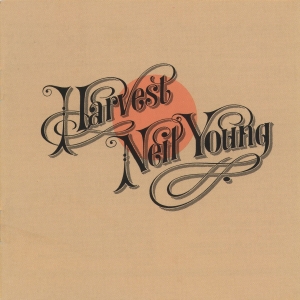 1) Harvest (1972)
Picking a single Young record to start with implicitly means missing much of his style. But if you must, Harvest, his bestselling effort, is the place to start. It features two of his biggest hits, “Heart of Gold” and “Old Man,” and a lot more: the freeform jamming of “Words (Between the Lines of Age),” Ben Keith’s evocative pedal-steel guitar on opener “Out on the Weekend,” and the interesting if not entirely successful orchestral productions “A Man Needs a Maid” and “There’s a World.” Add the country stomp of “Are You Ready for the Country,” the angry, rocking indictment of “Alabama” and the junkie lament “The Needle (and the Damage Done),” and you have the single greatest collection of Young songs. James Taylor adds banjo and stellar backing vocals with Linda Ronstadt to “Old Man,” a surprisingly mature sentiment from the then-twenty-four-year-old Young.
The Next 5:
11) Tonight’s the Night (1975)
12) Greendale (2003)
13) Sleeps with Angels (1994)
14) Mirror Ball (1995)
15) Silver & Gold (2000)



Leave a Reply
Want to join the discussion?Feel free to contribute!