

Insider’s Guide to Vinyl Shopping–Japanese Pressings
 Welcome to the latest edition of the Paradise Found Records blog. A couple of years back I shared some of my tips for successful vinyl shopping. This month I’m writing about my passion for Japanese pressings.
We don’t get a lot of used Japanese vinyl at our stores and are always happy to see it on those rare occasions when it comes in with collections we’re buying. As recently as last year we had enough in stock in Boulder to merit its own section, next to the “Used New Arrivals” bins by the bulletin board, but currently the few Japanese pressings we have are mixed in by artist/musical category. They are well worth seeking out. As my vinyl library has grown over the years I’ve increasingly shopped for more collectible albums, and it’s been fun to go down the rabbit hole of Japanese pressings, which are unique and offer much to cherish.
 Several things set Japanese pressings apart from records manufactured in other countries. Perhaps the most important is audio quality, which may be subjective but is still widely acknowledged. I have multiple records from the Original Master Recordings series by Mobile Fidelity Sound Labs produced by Analogue Productions. As much as I love how many MoFi’s sound, Japanese presses often sound better. I am mostly referring to Japanese albums made before 1990; since then there are fewer differences between records manufactured in the USA and Japan.
Older Japanese pressings offer superior audio for two reasons. First, the vinyl itself is higher quality; Japanese plants used higher quality material in the sixties, seventies and eighties. Before 1990, Japanese manufacturers used new, pure “virgin” vinyl, whereas domestic factories often used recycled plastic that introduced impurities, crackling and surface noise. During the energy crisis in the seventies, American manufacturers used thinner, lower-grade filler material to reduce costs, while Japanese producers maintained higher-quality standards. The Japanese production process was recognized for higher quality control that led to fewer warps and clicks.
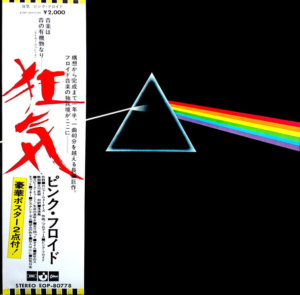
Because of this difference in production quality, the albums in the pricey MoFi Original Master Recordings series, which started with classical titles before adding rock in 1978 (Supertramp’s Crime of the Century was the first), were manufactured in Japan up until the late eighties. Advertising for MoFi’s referenced Japanese vinyl as superior, justifying the higher price tag. The first Japanese pressings of Dark Side of the Moon and Meddle, two Pink Floyd classics, are widely considered to be the best-sounding editions of those LPs. Japanese records are much quieter and less noisy than their American counterparts.
 A second reason Japanese vinyl sounds better is because the music is mixed differently. Because such a high percentage of Japanese record buyers live in apartments, audio engineers make the records brighter, reducing some of the bass/low end and boosting the mid- and high-ranges (you can always raise the bass level to compensate). Of course your results and ears may vary, but I find it easy to tell the difference when comparing Japanese to non-Japanese editions. In a handful of instances, including Fleetwood Mac’s Rumours and Tusk and Some Girls by the Rolling Stones, the US stampers were used at the Japanese pressing plant with the higher quality vinyl, and the sound is noticeably better. The lack of background hiss and surface imperfections makes for an ideal listening experience.
Another thing to love about OG Japanese pressings are the obi’s. An obi is a paper strip wrapped around the spine of the album, usually on the left side although some run along the top or to the right. Obi’s generally list the price in yen along with song titles and other relevant selling points in Japanese, often in bright and striking fashion with pictures. Many obi’s are graphically stunning, and are sought-after to the point where a record with an intact obi often sells for far more than one without. For example, the aforementioned Dark Side of the Moon and Meddle each run between $100 and $300 and up if they have the obi attached in excellent shape to go with the record. Without the obi both can be had for significantly less without sacrificing anything in audio quality.
 Obi’s are also desirable because of the implied condition of the vinyl. It’s safe to say that anyone who took special care to keep an obi in pristine shape did the same thing with the record itself, since it’s very easy for an obi to get torn or abused with repeated use. Foxing, rust-colored spots on printed materials that can develop over time as a result of oxidation and humidity, is inevitable unless a record is stored the best way: in plastic liners, shelved (not stacked) in a location without to high humidity or extreme temps. A well-treated obi is a well-treated record, as close to new as you can get once the seal has been broken.
Japanese pressings also often include unique lyric inserts with sometimes wildly incorrect transcriptions. Most song lyrics are available online these days, but pre-Internet they could be hard to deduce unless they came with the LP; no two people thought the lyrics on Exile on Main Street were the same. Once upon a time the only reliable way to learn or confirm many lyrics was through songbooks that included both the words and the chords for musicians. Here are a handful of lyrics mistranslated for the Japanese consumer:
On the Grateful Dead’s “Estimated Prophet,” “Standin’ on the beach, the sea will part before me” becomes “Standing on the beach to see what might befall me.” On Led Zeppelin’s “Immigrant Song,” “The hammer of the Gods will drive our ships to new lands, to fight the horde and sing and cry, Valhalla I am coming” becomes “Comin’ of the cold, drive our ships to new lands, fightin’ the haul, singin’ and cryin’, I am coming.” On Bob Dylan’s “Lay Lady Lay,” “Why wait any longer for the world to begin, you can have your cake and eat it too” becomes “Why wait any longer I don’t mean to complain, you can have love but you might lose it.” On Elvis Costello’s “Watching the Detectives,” “Red dogs under illegal legs” becomes “Red dogs and narrow eagle legs.” On Costello’s “King Horse,” “Cheap cut satin and bad perfume, showtime is almost here” becomes “Jean got saddened and had to fume she’ll die of dishonesty.” On Costello’s “This Year’s Girl,” “She’s not happy with the cost” becomes “She’s got havoc with the cost.” On Glen Campbell’s “By The Time I Get to Phoenix,” the New Mexico city is spelled “Albakerky.” And on Bob Marley’s “I Shot the Sheriff,” the first line morphs from “I shot the sheriff but I did not shoot the deputy” into “I shot sheriff but I did no shot to death” and “they say they want to bring me in guilty for the life of the deputy” becomes “they say they want to bring me in guilty for the killing of a Dirty G.” Not side-splitting but still amusing; on Costello’s Get Happy, the transcriptions are credited to one “Stanley,” who presumably was too embarrassed to provide his entire name.
“

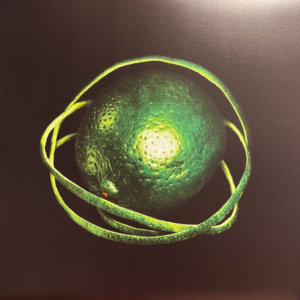 Big Thief – Double Infinity
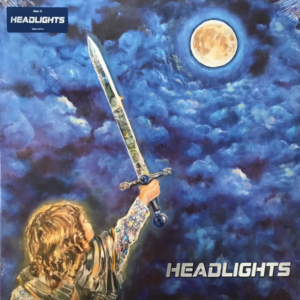 Alex G – Headlights
 Geese – Getting Killed
 S.G. Goodman – Planting By The Signs
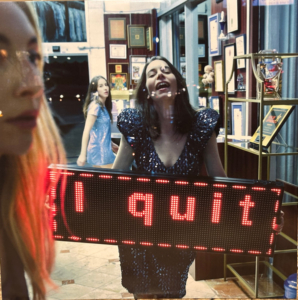 Haim – I Quit
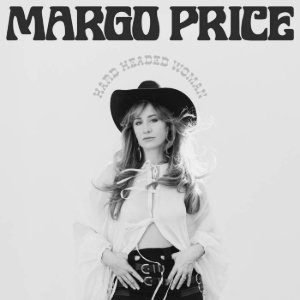 Margo Price – Hard Headed Woman
 Snocaps – Snocaps
 Jeff Tweedy – Twilight Override
 Wet Leg – Moisturizer
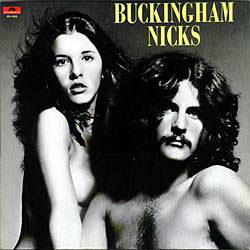 Buckingham Nicks – Buckingham Nicks
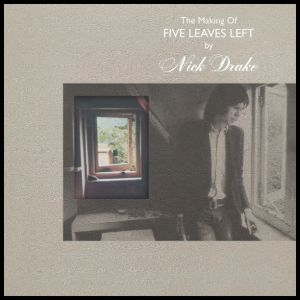 Nick Drake – The Making of Five Leaves Left
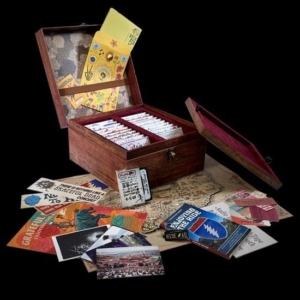 Grateful Dead – Enjoying The Ride
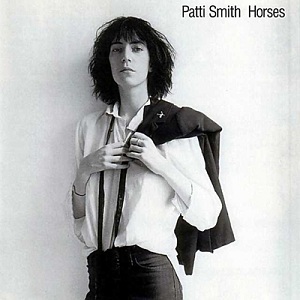 Patti Smith – Horses (50th anniversary edition)
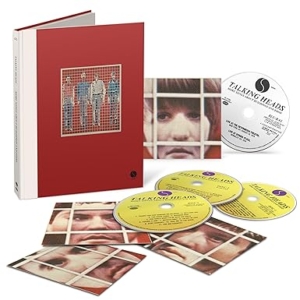 Talking Heads – More Songs About Buildings and Food