
Top Eleven Fictional Music Acts
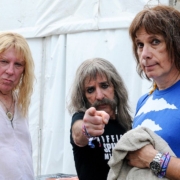
 Spinal Tap II: The End Continues, the sequel to one of the funniest and most influential films of all-time, hits theaters on September 12, with all of the original actors plus cameos by luminaries including Paul McCartney and Elton John. This is Spinal Tap, released in 1983, spurred an entire genre of mockumentaries and has played on more rock tour buses than anything before or after. A largely improvised profile of a fake, struggling metal band shot by fake fan/TV commercial producer Marty DiBergi (Rob Reiner, the actual director), the film includes numerous bits that have since entered the comedy and rock lexicons: amps that go to 11, bands getting lost backstage on their way to perform, drummers dying by spontaneous combustion, props that alternately swallow bandmembers or inadvertently wind up ten percent of the intended size, and on and on. No surprise it took forty years to attempt a follow-up; the original is perfect and will be impossible to top. Filming for the sequel began in early 2024 (the picture at left came in a text from a friend of a friend that worked on the project). It may be a fine line between stupid and clever, as guitarist Nigel Tufnel philosophizes, but the sequel will be lapped up by music lovers and comedy fans alike knowing it will probably land on both sides of that line.
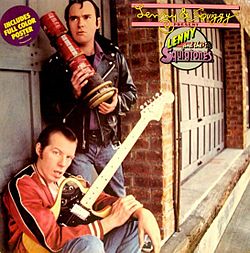 The principals in Spinal Tap are Tufnel (Christopher Guest), David St. Hubbins (Michael McKean) and Derek Smalls (Harry Shearer). Guest went on to become the leading auteur of mockumentaries; his Best in Show, A Mighty Wind, For Your Consideration and Waiting for Guffman are master classes in the art form. The fictional Spinal Tap’s genesis may have been as The Originals–forced to change their name to The New Originals by another outfit with the same moniker–but in real life Guest’s and McKean’s first recorded output as a duo is on the collectible Lenny and the Squigtones LP. That album is by Lenny (David Lander) and Squiggy (McKean), the pair that provided comic relief on Laverne and Shirley, the Happy Days spinoff.
To commemorate the return of my all-time favorite fictional band, here are my next ten favorite fictional artists in alpha order (because my list has to go to eleven), followed by another ten deserving of mention. (Warning: spoiler alerts ahead.)
 “Bad” Blake (Crazy Heart, 2009)
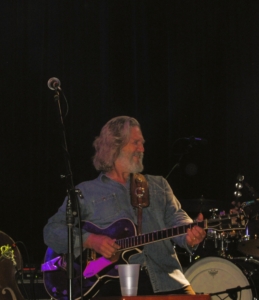
Jeff Bridges won a Best Actor Oscar for his sterling work as grizzled, alcoholic country music artist Otis “Bad” Blake. Blake struggles through midlife in a series of dingy hotels replaying his handful of hits for small bar crowds and living off his legend before connecting with Jean Craddock (Maggie Gyllenhaal), a beginning journalist looking for a profile. T-Bone Burnett breathes life into the classic country sound with the help of songwriter Stephen Bruton, who tragically died of cancer shortly before the movie’s release. Bridges, a lifelong musician, has a gravel-soaked timbre that made the soundtrack one of the better records of the year. “The Weary Kind,” the Burnett-Ryan Bingham composition sung by Bingham, won an Oscar for Best Song. (At left is a pic of Jeff Bridges from an August 2011 show at the Fox in support of his eponymous second album.)
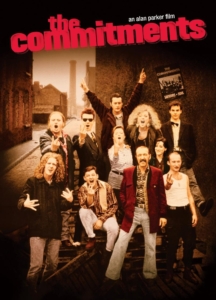 The Commitments (The Commitments, 1991)
Alan Parker’s excellent film, from a book by Roddy Doyle, examines the brief but entertaining life of a Dublin R&B band. The Commitments only play four gigs before fracturing after a spotlight for critics and Wilson Pickett of “In The Midnight Hour” fame ends with the drummer beating up the lead singer and Pickett showing up late. In their brief time together lead singer Deco Cuffe’s (Andrew Strong) overbearing personality alienates every other band member while trumpeter Joey “The Lips” Fagan (Johnny Murphy) beds each of the three female background singers. Manager Jimmy Rabbitte (Robert Arkins), a soul enthusiast who pulls the group together only to watch the disparate personalities combust, finds running things to be akin to herding cats. But it all comes together for three breathtaking minutes during a performance of the Dan Penn-Chips Moman classic “The Dark End of The Street,” a soul ballad first made famous by James Carr and later covered by Aretha Franklin, Linda Ronstadt, Ry Cooder and The Flying Burrito Brothers. That brief shining moment for The Commitments in front of a mesmerized crowd captures the ephemeral quality of the best live music, even if it is an overly brief reward for the hard work required to make it happen.
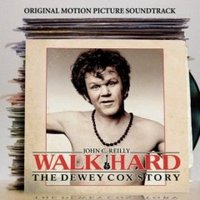 Dewey Cox (Walk Hard: The Dewey Cox Story, 2007)
Walk Hard: The Dewey Cox Story, written by Judd Apatow and Jake Kasdan, effectively blows up the music biopic genre. Using the Johnny Cash bio Walk the Line as a starting point, the movie makes fun of voluminous storytelling cliches. In fact, Walk Hard impacts the ability to enjoy the genre altogether; after watching one can’t view serious-minded dramatic renderings (e.g. Elton John, Queen) or documentaries (e.g. Billy Joel, The Eagles) without wincing at the deployment of the predictable elements. The traumatic childhood, the unsupportive parents/spouses, the discovery by a seasoned record producer, characters who always mention their name and the year to help viewers, the division of a career into specific periods, the inevitable fall and ultimate redemption of the artist–they’re all here. In addition to Johnny Cash, Walk Hard includes hilarious references to Sam Phillips, The Beatles, Brian Wilson and The Partridge Family. Real-life mirrors the movie: when Ozzy Osbourne died seventeen days after his final show in July, it was hard not to think of Dewey Cox, who famously dies twenty minutes after his comeback concert. Must viewing for music and parody lovers.
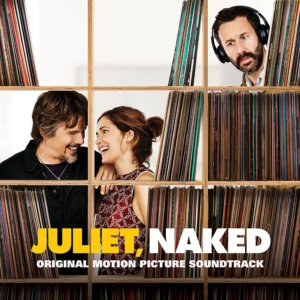 Tucker Crowe (Juliet, Naked, 2018)
Perhaps no twentieth century writer captures the intensity of music appreciation better than British author Nick Hornby, most famously known for High Fidelity. Juliet, Naked is a humorous, insightful look at the foibles of obsessive fandom. Duncan Thomson (Chris O’Dowd) runs a web site dedicated to Tucker Crowe (Ethan Hawke), a rootsy singer-songwriter who’s retreated into obscurity and stopped performing. When Crowe sends Thomson his long sought-after demos, Thomson’s frustrated wife Annie Platt (Rose Byrne) posts a negative review and winds up in an online dialogue with Crowe, with things developing to the point where the musician visits their southeast England town. The movie is mainly about the decline of Thomson’s and Platt’s relationship and uses the obsessed fan elements mostly for laughs even as they ring true. Hawke expertly portrays a broke, adrift musician hiding from the last embers of his notoriety (and multiple children by multiple partners) with pathos and humor, and the film ends on a hopeful note.
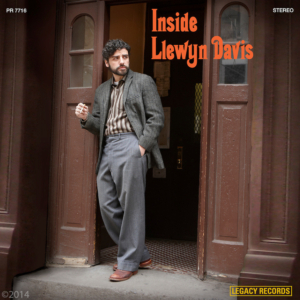 Llewyn Davis (Inside Llewyn Davis, 2013)
Sometimes the less you know about your musical heroes, the better. Llewyn Davis (Oscar Isaac) is a perfect example: a singer (loosely based on Dave Van Ronk) from the dawn of folk in Greenwich Village with talent that’s belied by an annoying, universally off-putting personality. Davis is there as the genre explodes but is unable to capitalize, much to his chagrin, which he makes sure every single person he comes into contact with knows. Inside Llewyn Davis is another in a long line of idiosyncratic Coen Brothers films with little in the way of resolution and an unlikable lead. But the music in the film, from Isaac, Carrie Mulligan, Justin Timberlake and Marcus Mumford, is consistently superb even as it’s undercut by the unpleasantness of spending time with the title character.
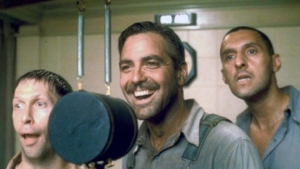 Soggy Bottom Boys (O Brother, Where Art Thou?, 2000)
Everyone has their favorite Coen Brothers movie–Fargo and The Big Lebowski have the most fans–but for me the duo’s pinnacle is 2000’s O Brother, Where Art Thou, whose soundtrack launched a folk and bluegrass revival and greatly expanded the fanbases of Alison Krauss, Gillian Welch and Chris Thomas King. Loosely based on Homer’s The Odyssey and full of memorable characters and lines, the story follows three Depression-era chain-gang-escapees who stumble into a recording studio and sing a few songs for blind DJ/record producer “Radio Station Man” (Stephen Root). The trio’s take on “Man of Constant Sorrow,” the folk classic first recorded in 1913, becomes a huge hit as the escapees journey to reclaim a lost treasure while evading a posse. The film culminates in a performance of the song for an enthused crowd stunned to see the trio in the flesh, following which incumbent, mid-campaign governor Homer Stokes (Charles Durning) pardons the group to curry favor with voters. The soundtrack to the film, produced by T-Bone Burnett, is one of the biggest selling soundtracks of all-time and won three Grammys.
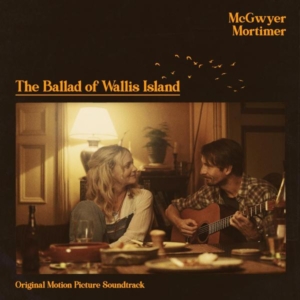 McGwyer Mortimer (The Ballad of Wallis Island, 2025)
Here’s a more recent example: 2025’s The Ballad of Wallis Island tells the tale of lottery winner Charles Heath (Tim Key, who starred in the wry, excellent British series The Detectorists) on a remote Welsh isle. Heath uses his windfall to reunite the folk duo McGwyer Mortimer, who’s brief turn in the spotlight was a shared love for him and his late wife. The duo show up separately only to find out that the magic, while still capable of briefly flickering, is in the past. McGwyer (Tom Basden) has never been able to replicate his success as a solo act, while Mortimer (Carrie Mulligan, in a throwback to her Inside Llewyn Davis role) has married, moved to Portland and abandoned the music business altogether. The attempted reunion doesn’t go as planned, and the film ultimately focuses on the two men trying to come to terms with the past. In the case of McGwyer, that means reconnecting with why he loves music, while with Heath it means accepting the loss of his spouse and moving on.
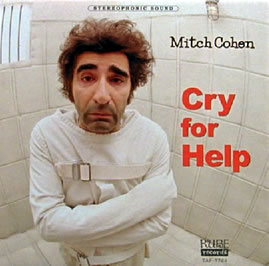 Mitch and Mickey (A Mighty Wind, 2003)
Christopher Guest took the improvisational, mockumentary spirit of This is Spinal Tap and mined it repeatedly. 2003’s A Mighty Wind, arguably his peak, spoofs the folk movement of the early sixties. Although a number of fictional acts are included–including The Folksmen, the same trio of actors in Spinal Tap–the centerpiece is Mitch and Mickey, played by, respectively, Eugene Levy and Catherine O’Hara. The long-dreamed-of reunion of the pair serves as the headliner of the PBS concert created to commemorate the passing of folk impresario Irving Steinbloom. In the decades since their split, Mitch has lapsed into a semi-catatonic state (pictured at right is one of his solo efforts) while Mickey plays catheter-themed songs to support her husband’s urology-focused business. Like the best fictional acts, the songs are just as good as what they aim to parody; in this instance, the tribute concert (and the film) culminates in a tender reading of “A Kiss at the End of the Rainbow,” the love ballad that made stars of the pair.
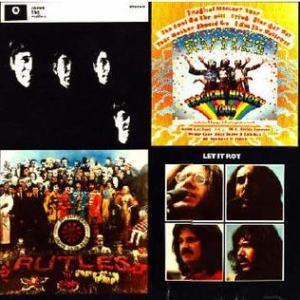 The Rutles (All You Need is Cash, 1978)
This is Spinal Tap was greatly influenced by All You Need is Cash, the 1978 profile of The Rutles, the “pre-fab four” that is a Beatles parody and homage. Written by Monty Python’s Eric Idle, the film features Mick Jagger and others speaking reverently about the group’s influence. But where Spinal Tap’s humor comes from poking fun at the imperfections of musicians and the tropes of music biopics, All You Need is Cash is more focused on replicating and spoofing The Beatles’ rise and fall. Segments specifically parody the “Paul is dead” craze, the “we’re bigger than Jesus” uproar, the visit to India, the rooftop concert, and so on. While it often underwhelms due to its overreliance on the Beatles chronology, the songs–created by Neil Innes of Bonzo Dog Band fame–hit it out of the park, mimicking the sound so well they could easily be confused for Lennon/McCartney originals. “Number One,” “Hold My Hand” and “Get Up and Go” are so infectious they could readily be added to the Beatles canon, and are so close to the source material that the music publisher forced Lennon’s name to be added to the composer credits after The Beatles had blessed the project. It may not stand up to repeat viewing, but the soundtrack is still likely to appeal to Beatles fans.
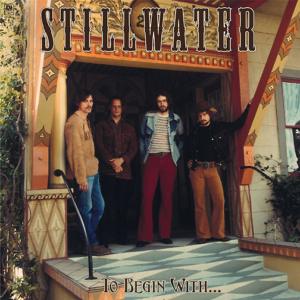 Stillwater (Almost Famous, 2000)
My favorite rock movie of all-time is Almost Famous, the 2000 autobiographical effort from writer/director Cameron Crowe that chronicles his time as a teenage journalist for Rolling Stone in the seventies. Crowe created Stillwater for the film, a composite group that combines elements of The Eagles, Led Zeppelin and The Allman Brothers Band. In the film Stillwater is, to quote Lester Bangs (Philip Seymour Hoffman) “a mid-level band struggling with their own limitations in the harsh face of stardom.” The group’s music, created by Peter Frampton and Crowe’s then-wife Nancy Wilson of Heart, is tasty seventies stadium rock. In a movie filled with great lines, this one from lead singer Jeff Beebe (Jason Lee) perfectly encapsulates the motivation of many classic rockers: “Some people have a hard time explaining rock’n’roll. I don’t think anyone can really explain rock’n’roll. Maybe Pete Townsend, but that’s okay. Rock’n’roll is a lifestyle and a way of thinking and it’s not about money and popularity. Although some money would be nice. But it’s a voice that says, ‘Here I am–and fuck you if you can’t understand me.’ And one of these people is gonna save the world. And the chicks are great.”
Honorable Mentions:
Citizen Dick (Singles, 1992)
Daisy Jones & The Six (Daisy Jones & The Six, 2023)
Marie DeSalle (High Fidelity, 2000)
Drive Shaft (Lost, 2004-2010)
Troy Dyer (Reality Bites, 1994)
Hedwig and the Angry Inch (Hedwig and the Angry Inch, 2001)
Mouse Rat (Parks & Recreation, 2009-2015)
The Oneders (That Thing You Do!, 1996)
Sex Bob-Omb (Scott Pilgrim vs. The World, 2010)
Style Boyz (Pop Star: Never Stop Never Stopping, 2016)