Tag Archive for: boulder record store

Top 20 Records of 2025

Welcome to the year-end edition of the Paradise Found Records blog, It was our best year yet, and we greatly appreciate the support of our customers in the Front Range and Northern California. We love sharing good music with you, and there is nothing better than seeing your smiling faces! Record Store Day 2026 is on April 18 and we’re looking forward to more events and listening parties in the coming year. From the bottom of our hearts, thank you for your support and for making our jobs so much fun.

2025 was another great year for new music. The big story last year was Chappell Roan, whose late 2023 release The Rise and Fall of a Midwest Princess continues to sell well at both locations. The big music story this year was KPop Demon Hunters, an American-made Netflix movie that greatly expanded K-pop’s popularity across the globe. The film starred fictional K-pop girl group Huntr/x and became the most-watched film on Netflix and some of the most-streamed music on Spotify. If you’re unfamiliar with the music or movie, just ask someone born this century and they’ll bring you up to speed. There is a KPop Demon Hunters soundtrack album out on vinyl, but our biggest sellers in 2025 included Hayley Williams’ excellent Ego Death at a Bachelorette Party and, as always, Fleetwood Mac’s Rumours, a perennial favorite.

My two favorite albums of the year, by Jeff Tweedy and Geese, both came out on the same late September Friday. I’m tempted to crown the Geese album number one for its sheer brilliance and originality, but I think Jeff Tweedy’s ambition deserves to win out. Twilight Override is his best solo work, and its thirty songs are a salve for trying times.

Here are my top twenty records of the year (the top ten are listed in alpha order), including the five best archival releases.
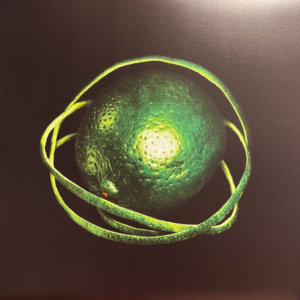
Big Thief – Double Infinity

What do you do when an original member (bassist Max Oleartchik) departs after nine years? If you’re Big Thief you lean into the jammier style of songs like “Time Escaping” and “Love Love Love” from 2022’s superb Dragon New Warm Mountain I Believe in You.  Much of the credit for the appeal of Double Infinity goes to multi-instrumentalist Laraaji, whose zither, piano and percussion appear throughout along with distinctive vocals on “Words” and “Grandmother.” This may be a transitional phase for Big Thief, but even when not up to their high standards it’s still consistently satisfying. (Favorite track: “Words”)
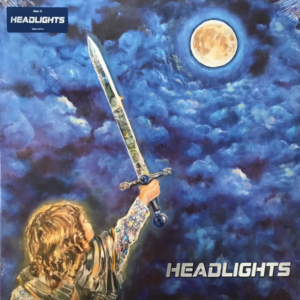


Alex G – Headlights

The tenth record from Alex Giannascoli aka (Sandy) Alex G aka Alex G’s is his first major-label release. The good news is he doesn’t stray from the formula of 2022’s excellent God Save The Animals other than dialing back on instrumental numbers. A true one-man-band, Giannascoli plays nearly every instrument here and varies between folk-rock and indie-rock with weird Auto-Tune and other vocal effects and found sounds mixed in to keep things interesting. He closes the record with its most rocking song, the rollicking “Logan Hotel,” recorded live with his touring band at the eponymous Philadelphia location. (Favorite track: “Afterlife”)
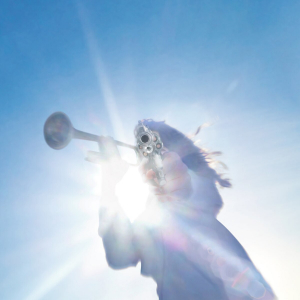


Geese – Getting Killed

The Brooklyn group’s fourth album is overstuffed, manic and wholly original. Lead singer Cameron Winter’s December 2024 solo effort was subdued, but here the group moves in the opposite direction, creating a hybrid of Talking Heads, Captain Beefheart and Radiohead that explodes off the turntable. Winter’s expressive voice soars above it all while guitarist Emily Green’s chiming guitars lead the songs towards powerful finishes. This is that rare album that sounds bizarre and off-putting at first–opening track “Trinidad” literally features Winter screaming “There’s a bomb in my car!”–but quickly worms its way into the brain and rewards repeated listening. (Favorite track: “Islands of Men”)
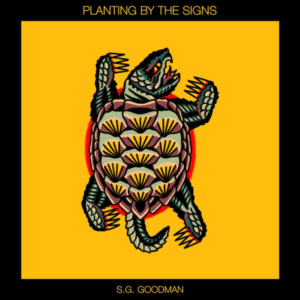
 

S.G. Goodman – Planting By The Signs

The title of S.G. Goodman’s third album refers to following nature’s cues. In Goodman’s case, those cues were learned in the hollers of southeast Kentucky where she grew up “living like the sun don’t shine on the same dog’s ass every day.” The record leads off with driving Americana before settling into pretty, sparse folk duets with Bonnie Prince Billy and Matthew Rowan. “Heaven Song” is my favorite closer of the year, a nine-minute, slow-building shaggy dog story that finds Goodman meandering through a life of love and loss in an old Chevy Malibu, ultimately concluding that a philosophy of “Maybe if I see it then I’ll want it” may be the closest she’s going to get to finding meaning. (Favorite track: “Heaven Song”)
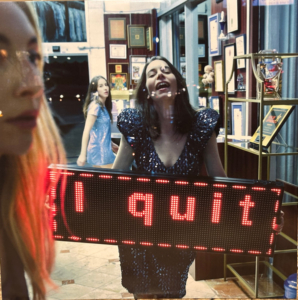
 

Haim – I Quit

Haim’s follow-up to 2020’s superb Women in Music Part III might not quite reach that album’s heights, but it still showcases the sisters’ ability to cover a lot of musical ground. First single and song-of-the-summer candidate “Relationships” features beat-heavy Queen Bey style while “Down to be Wrong” is an unabashed Tom Petty tribute. Whether she’s shredding on her electric guitar or singing confessional Americana, middle sister Danielle adds R&B to the sunny SoCal sentiments of her Laurel Canyon ancestors to create sumptuous sounds for the streaming generation. (Favorite track: “Down To Be Wrong”)
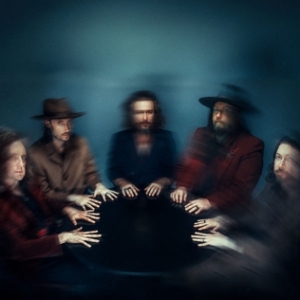


My Morning Jacket – Is

The tenth studio record from Jim James and company is their best since 2011’s Circuital, and the secret is the songs. Bringing in famed Pearl Jam/Bruce Springsteen producer Brendan O’Brien also works wonders. “Time Waited” and “Squid Ink” throwback respectively to their more soulful and anthemic aspirations, while “I Can Hear Your Love” and “Beginning at the Ending”  take the sound in a more concise pop direction. “Half a Lifetime” starts with a staccato structure before delivering a chorus for the ages. It’s always refreshing when a band finds a new gear this far into its career. (Favorite track: “Half a Lifetime”)
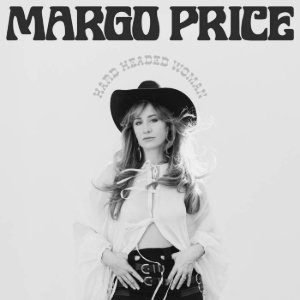
 

Margo Price – Hard Headed Woman

After the psychedelics-fueled rock of 2023’s Strays, Margo Price returns to her alt-country roots on an excellent fifth record. Whether she’s quoting Kris Kristofferson in “Don’t Let the Bastards Get You Down” or spinning Paul Simon’s “Still Crazy After All These Years” into the Nashville pop of “Love Me Like You Used to Do” with vocal help from Tyler Childers, Price has a knack for memorable melodies and wears her Nashville outlaw country badge like a pair of comfy slippers. Price’s powerful live shows have helped her build a steady fan base; she’s way overdue to break through in 2026. (Favorite track: “Don’t Let the Bastards Get You Down.”)
 

Snocaps – Snocaps

In late October this infectious debut from an Americana supergroup dropped with no advance notice. Snocaps members include Katie Crutchfield (aka Waxahatchee) and MJ Lenderman (the Wednesday guitarist member who’s solo Manning Fireworks was one of 2024’s best albums) along with Crutchfield’s twin sister Alison and Brad Cook. The songs are more indie-rock than what you might expect–imagine the Breeders with a bit of a country disposition–and bring the Crutchfield sisters together for the first time since they played together as P.S. Eliot last decade. Lenderman’s contributions recall the Byrds more than the Neil Young vibe of his other work. The end result is a wonderful, unexpected treat. (Favorite track: “Heathcliff”)
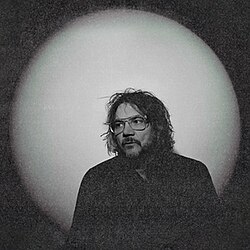
 

Jeff Tweedy – Twilight Override

The Wilco front man’s latest is an impressive 3-LP, thirty-song attempt to raise spirits through art. Whether he’s encouraging listeners in “Feel Free,” joking about a miserable prom in “Forever Never Ends,” embracing small joys in “One Tiny Flower” or paying tribute to the Velvet Underground in “Lou Reed Was My Babysitter,” his passion, humor and dedication shine throughout. Simultaneously ambitious and simple, the record is a heartwarming gift. “Amar Bharati” may be a tribute to the Indian ascetic who has kept his arm raised in devotion for fifty-plus years, but it’s just as easily a metaphor for Tweedy’s unceasing determination to make creating art his raison d’etre. Deeply personal, Twilight Override goes places Wilco hasn’t gone, no small feat. (Favorite track: “Amar Bharati”)
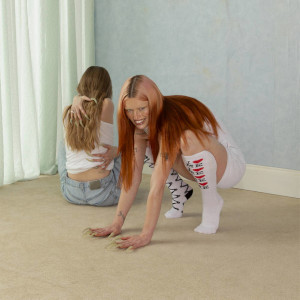
Wet Leg – Moisturizer

The Isle of Wight’s Rhian Teasdale and Hester Chambers burst on the scene in 2021 with two slices of indie-rock heaven, “Chaise Lounge” and “Wet Dream.” Their ensuing debut album maintained that energy and confirmed them as legit. Moisturizer impressively takes things up a notch. Now fully embracing music as a career, they’ve also declared themselves a band and not a duo, boosting the fellow musicians who contributed to the debut. Together they craft unique earworms that showcase their sense of humor and skill at creating irresistible hooks. (Favorite track: “Davina McCall”


(Next 5: Matt Berninger — Get Sunk; Car Seat Headrest — The Scholars; Lucy Dacus — Forever is a Feeling; Mavis Staples — Sad and Beautiful World; Wednesday — Bleeds)

Five Best Archival Releases
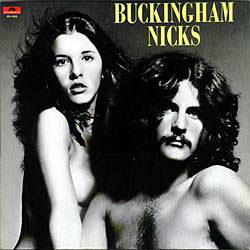
Buckingham Nicks – Buckingham Nicks

In 1973 Lindsey Buckingham and Stevie Nicks worked with producer Keith Olsen on an impressive debut of Southern California folk-rock. Olsen famously played the album for Mick Fleetwood, who was in LA shopping for a new front man, and the rest is history. The LP has been out-of-print since its original release and has become a grail over the following decades. In September the pair finally put their acrimony aside long enough to coordinate on a repressing so that it’s finally reasonably priced and easily found. It’s required listening for Rumours and Fleetwood Mac fans; you can hear the seeds of “The Chain” in “Lola (My Love)” and of “Second Hand News” in “Don’t Let Me Down Again.” The LP also includes an early version of “Crystal,” later reworked on Fleetwood Mac. (Favorite track: “Don’t Let Me Down Again”)
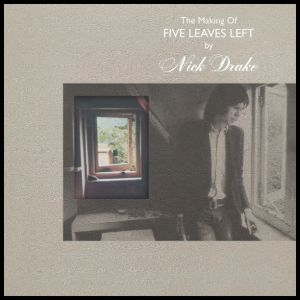
Nick Drake – The Making of Five Leaves Left

Nick Drake died in 1974 after only three records of highly distinctive folk. It wasn’t until twenty-five years later, after “Pink Moon” was used in an Apple ad, that his music found the audience it deserved. Notoriously shy, Drake only played a handful of shows and fans have since grabbed onto any available archival material. This box contains a treasure trove of recordings from his 1969 debut, including reels discovered in the collection of folk peer Beverly Martyn. Not everything here is a revelation, but it’s still powerful and stirring to hear Drake develop songs including “Time Has Told Me,” “Man in a Shed” and “River Man” into the shape that would make them folk standards. (Favorite track: “River Man” Take 1, 4th January 1969)
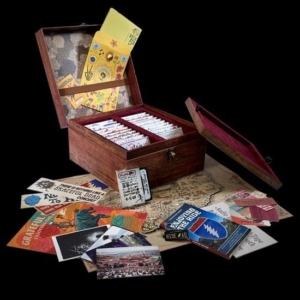
 

Grateful Dead – Enjoying The Ride

How does a group that’s released more archival material than any other musical act in history celebrate its sixtieth anniversary? If you’re the Grateful Dead it’s with a 60-CD (and one cassette) behemoth that includes all or parts of twenty-nine shows spanning 1969-1994 from twenty-one of their favorite venues (including Red Rocks, of course). With a $600 price tag and a limited run of 6,000–which sold out within weeks–this one was only for the most hardcore heads, but props to the Dead for finding a way to top their many prior boxes. Start saving now for 2035’s 70th anniversary release. (Favorite track: “Hard to Handle” Live at Fillmore East, New York, NY 4/25/71)
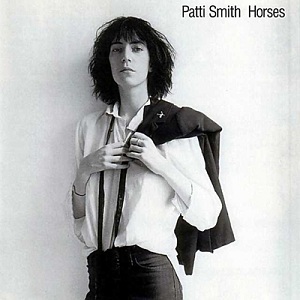


Patti Smith – Horses (50th anniversary edition)

Patti Smith and Debbie Harry were the only female bandleaders to emerge from the mid-seventies New York scene; Smith incorporated poetry from the beginning and has more recently become an excellent author, as evidenced by the three books she’s released in the past decade and a fourth, Bread of Angels, that came out in November. The 50th anniversary edition of her beloved debut comes with many previously unreleased delights including her original demo tape and a great take of Smokey Robinson’s classic “When The Hunter Gets Captured By The Game.” (Favorite track: “When The Hunter Gets Captured By The Game”)
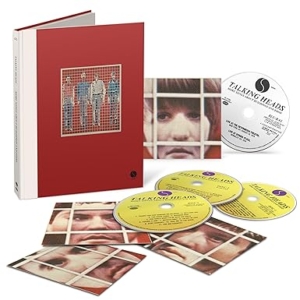
 

Talking Heads – More Songs About Buildings and Food

The sophomore Talking Heads effort was their first with Brian Eno as producer. Together they went on to produce some of the best and most influential music to come out of the New Wave movement born at CBGB in Manhattan’s East Village. The deluxe box includes a number of interesting outtakes and a live 1978 New York show, but the real treat is a DVD of 1978 concert footage from New York and Berkeley (only available in the CD edition). Stop Making Sense may have shown the group at their peak, but the trademark nervous energy on display herein is a slice of heaven for anyone looking to witness the roots of one of the most important American acts ever. Be advised, the Berkeley footage is not high quality but still very much worth checking out. (Favorite track: “Found a Job” Live at the Entermedia Theatre, New York, NY 8/10/78)
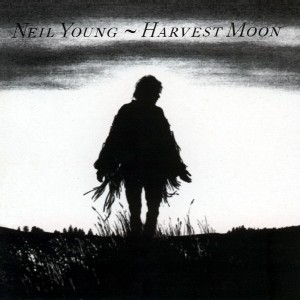
In Celebration of Neil’s 80th Birthday: His Ten Best Records

No other rock musician has been more prolific over the past sixty years than Neil Young, who turns eighty in November. Young has put out forty-three studio albums since 1968 in addition to being a part of Buffalo Springfield, Crosby, Stills, Nash and Young, and the Stills-Young Band. He’s also released eleven live albums and offered deep dives into his vault via three 10+ CD Archives boxes that only go through 1987. Famous for a “first take is the best take” approach and a dedication to following his muse regardless of the damage left in its wake, Young has used numerous backing bands. Crazy Horse is the best-known, but Young has also recorded with Booker T and the MGs, Pearl Jam, the Trans Band, Promise of the Real, and most recently the Chrome Hearts.

To describe Young’s output as intimidating is an understatement. I’ve devoted two blogs in the past to his buried treasures. To honor a musician who’s surely earned a spot on the Mount Rushmore of classic rock, here are his ten best studio releases in reverse order.

10) Harvest Moon (1992)

Love him or hate him, Neil Young’s aversion to standing still can be frustrating for fans and fellow musicians; in 1975 he abandoned the only Stills-Young Band tour halfway through because he wasn’t feeling it. In the early nineties he pivoted away from the grunge movement he helped spawn to return to his folk roots with this collection of softer numbers. Bringing back Linda Ronstadt, James Taylor and Nicolette Larson for vocal support for the first time in over a decade, Harvest Moon helped him reconnect with fans scared off by years of extended, often distortion-drenched material. The album welcomes like a warm embrace born from hard-won experience: opener “Unknown Legend” paints lost youth in mythical terms, “From Hank to Hendrix” grasps at the embers in the last days of a long-term companionship, and the title track might just be the most inviting song he’s penned, an elegant waltz celebrating deep love and romance.

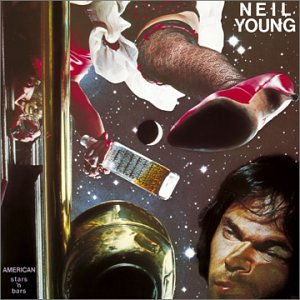
9) American Stars N’ Bars (1977)

Young’s penchant for changing his mind mid-production has resulted in many LPs cobbled together from disparate sessions and parts, and he has abandoned countless albums. His decision to not put out Homegrown was so last-minute that it famously required buying back copies that were ready to be shipped to stores (he ultimately released the album in 2020). American Stars n’ Bars, whose cover was designed by actor Dean Stockwell, is the best example of this approach to making records. Side one contains deliberately sloppy but infectious tracks like “Hold Back The Tears” and “Bite the Bullet” with backing vocals by Linda Ronstadt and Nicolette Larson, and “Saddle Up The Palomino” starts with Ronstadt’s laughter. Side two features “Like a Hurricane,” one of his most beloved songs, alongside the beautiful if brief “Star of Bethlehem” with harmony by Emmylou Harris. It also includes “Will to Love,”  perhaps the weirdest thing he’s ever recorded, which equates the search for love and meaning with a fish struggling upstream sung to a crackling fireplace. Whether the track succeeds or not is debatable, but it’s certainly unforgettable.

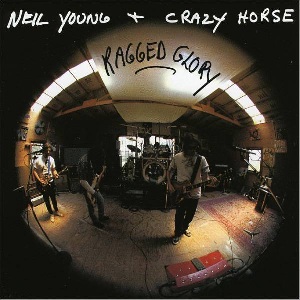
8) Ragged Glory (1990)

Young embraced a grunge ethos early on in his career; “Cinnamon Girl” might be the first grunge song, and a garage-focused spirit has always been intrinsic to his harder rock. His well-deserved rep as the Godfather of Grunge dates largely to Ragged Glory and Freedom, the 1989 album that preceded it, both featuring Crazy Horse. Nirvana and likeminded Seattle artists exploded in the years immediately after the two LPs, and Kurt Cobain, Eddie Vedder and others credited Young with inspiration. After wandering through a musical desert in the eighties with a number of failed genre exercises, he rediscovered his original drive here. “F*!#in’ Up,” “Love to Burn” and “Love and Only Love” feature shredding, barbed guitar solos, while “Mansion on the Hill” marries psychedelic optimism to grunge’s metal urgency.

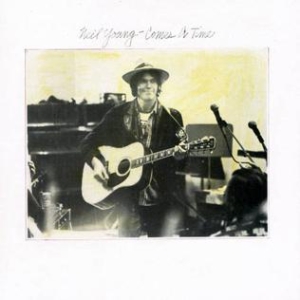
7) Comes a Time (1978)

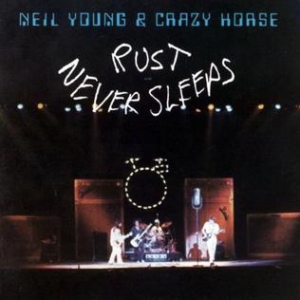
Neil’s music is easily categorized as hard or soft. In the case of Rust Never Sleeps, he literally divides the album in half with acoustic songs on one side and rocking numbers on the other. Like Harvest Moon, Comes a Time stands apart from most of his discography in its presentation of nothing but the folk side (with one exception, “Motorcycle Mama”). It works because it includes some of his best material and the harmonies of frequent late seventies contributor Nicolette Larson, who had her biggest hit with a cover of its “Lotta Love.” From wistful opener “Goin’ Back” through the evocative longing of “Peace of Mind” to the singalong title track and the nostalgic departing sentiment of closer “Four Strong Winds,” this album is a home run if you prefer Neil’s gentler sound.

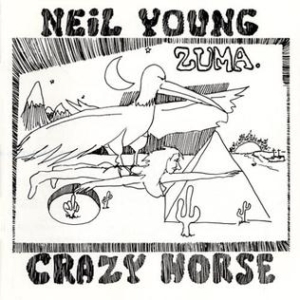
6) Zuma (1975)

Young’s first post-Ditch-Trilogy release reunites him with Crazy Horse and finds him slightly more accessible, although the darkness is always just a shot away. His more tender side is reflected in “Pardon My Heart” and “Through My Sails,” the latter with harmonies by Crosby, Stills and Nash, although “Drive Back” hints at the punk fury to come in Rust Never Sleeps. The album’s highlights are the long, slow jams of “Danger Bird” and “Cortez the Killer.” The latter quickly became a crowd favorite as it recalled the extended improvisational spirit of “Down By The River” alongside iconic lyrics that romanticize the Aztec civilization as it thrived before the Cortes armada wreaked death and destruction in the sixteenth century.

5) Rust Never Sleeps (1979) 

By the late seventies punk and new wave ruled the airwaves. Young’s timely response was this half-acoustic, half-electric record that tapped into punk’s popularity while still containing some of his prettiest folk compositions. “Thrasher” is one of Neil’s most personal songs with its confession of his motivation for leaving others in the lurch in pursuit of his muse. “Pocahontas” describes man’s departure from nature and the resulting loss, while “Sail Away” is a touching love song. The electric side kicks off with arguably Neil’s finest hour, “Powderfinger,” a tale of a young man painfully discovering the horrors of war that includes the classic phrase “Numbers add up to nothing.” Elsewhere he sews the seeds of his Godfather of Grunge status with the loud, angry “Sedan Delivery” and “Welfare Mothers” before concluding with the epic “My My, Hey Hey (Into the Black)” featuring one of his best-known lyrics, “It’s better to burn out than to fade away.” 

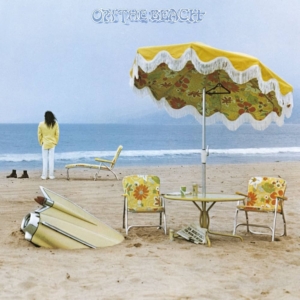
4) On The Beach (1974)

Neil Young’s response to the stardom that resulted from Harvest was his “Ditch Trilogy” of Time Fades Away, Tonight’s The Night and On The Beach, so-called because he claimed to be deliberately driving his notoriety into the ditch. The third album is the best and most inviting of the three. Kicking off with the minor hit “Walk On,” the first half features the keyboard- and pedal-steel-centered “See The Sky About to Rain,” the stripped-down banjo of “For The Turnstiles” and the driving “Revolution Blues.” The second half takes a more meditative turn with the deep blues of the title track followed by “Motion Pictures,” an elegy to then-wife actress Carrie Snodgrass, and the nine-minute-long, mostly solo “Ambulance Blues.” The title track contains one of my favorite Neil lines: “Though my problems are meaningless, that don’t make them go away.”

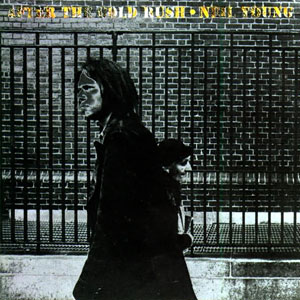
3) After the Gold Rush (1970)

Young’s third album eschewed the longer jams of Everybody Knows This is Nowhere; its longest and best-known track, “Southern Man,” clocks in at only six minutes. Instead it focuses more on the lush harmonies Young was exploring with Crosby, Stills, Nash and Young, even if only Stills from that group contributes here. “Tell Me Why,” “Birds” and “I Believe in You” all would’ve fit comfortably on any CSNY release. The record also include three meta Young tracks that marry his sadder instincts to that high, mournful tenor: “Only Love Can Break Your Heart,” “Don’t Let it Bring You Down” and a cover of Don Gibson’s country hit “Oh Lonesome Me.” By turns angry, sad and hopeful, After the Gold Rush helped Young find a wider audience even as it leaned into elements that led detractors to describe him as relentlessly depressing.

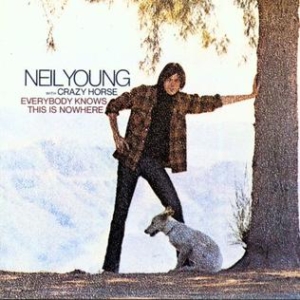
2) Everybody Knows This is Nowhere (1969)
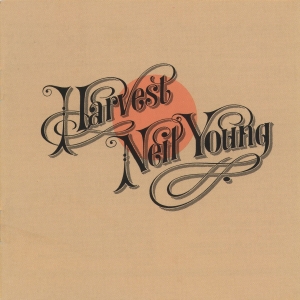
By the time Young’s sophomore album came out, he had already achieved stardom through Buffalo Springfield. His eponymous debut is a logical extension of his Springfield work, but it is Everybody Knows This is Nowhere where he demonstrates surprising new range and the more improvisational aesthetic that would fuel his best work. “Down By The River” and “Cowgirl in the Sand”–two nine-plus minute tracks with extended, spirited guitar shredding–were both composed the same day as opener “Cinnamon Girl,” when he was tapping into a creative streak spurred by a 103 degree fever. The album also has its mellower side in the heartbreak of “The Losing End (When You’re On)” and the haunting “Round and Round (It Won’t Be Long).” 

1) Harvest (1972)

Picking a single Young record to start with implicitly means missing much of his style. But if you must, Harvest, his bestselling effort, is the place to start. It features two of his biggest hits, “Heart of Gold” and “Old Man,” and a lot more: the freeform jamming of “Words (Between the Lines of Age),” Ben Keith’s evocative pedal-steel guitar on opener “Out on the Weekend,” and the interesting if not entirely successful orchestral productions “A Man Needs a Maid” and “There’s a World.” Add the country stomp of “Are You Ready for the Country,” the angry, rocking indictment of “Alabama” and the junkie lament “The Needle (and the Damage Done),” and you have the single greatest collection of Young songs. James Taylor adds banjo and stellar backing vocals with Linda Ronstadt to “Old Man,” a surprisingly mature sentiment from the then-twenty-four-year-old Young.

The Next 5:

11) Tonight’s the Night (1975)

12) Greendale (2003)

13) Sleeps with Angels (1994)

14) Mirror Ball (1995)

15) Silver & Gold (2000)

Top Eleven Fictional Music Acts

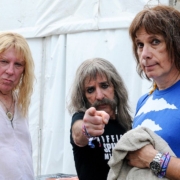
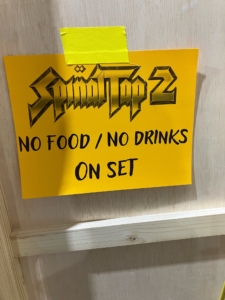
Spinal Tap II: The End Continues, the sequel to one of the funniest and most influential films of all-time, hits theaters on September 12, with all of the original actors plus cameos by luminaries including Paul McCartney and Elton John. This is Spinal Tap, released in 1983, spurred an entire genre of mockumentaries and has played on more rock tour buses than anything before or after. A largely improvised profile of a fake, struggling metal band shot by fake fan/TV commercial producer Marty DiBergi (Rob Reiner, the actual director), the film includes numerous bits that have since entered the comedy and rock lexicons: amps that go to 11, bands getting lost backstage on their way to perform, drummers dying by spontaneous combustion, props that alternately swallow bandmembers or inadvertently wind up ten percent of the intended size, and on and on. No surprise it took forty years to attempt a follow-up; the original is perfect and will be impossible to top. Filming for the sequel began in early 2024 (the picture at left came in a text from a friend of a friend that worked on the project). It may be a fine line between stupid and clever, as guitarist Nigel Tufnel philosophizes, but the sequel will be lapped up by music lovers and comedy fans alike knowing it will probably land on both sides of that line.
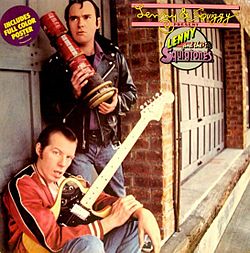
The principals in Spinal Tap are Tufnel (Christopher Guest), David St. Hubbins (Michael McKean) and Derek Smalls (Harry Shearer). Guest went on to become the leading auteur of mockumentaries; his Best in Show, A Mighty Wind, For Your Consideration and Waiting for Guffman are master classes in the art form. The fictional Spinal Tap’s genesis may have been as The Originals–forced to change their name to The New Originals by another outfit with the same moniker–but in real life Guest’s and McKean’s first recorded output as a duo is on the collectible Lenny and the Squigtones LP. That album is by Lenny (David Lander) and Squiggy (McKean), the pair that provided comic relief on Laverne and Shirley, the Happy Days spinoff.
To commemorate the return of my all-time favorite fictional band, here are my next ten favorite fictional artists in alpha order (because my list has to go to eleven), followed by another ten deserving of mention. (Warning: spoiler alerts ahead.)

“Bad” Blake (Crazy Heart, 2009)

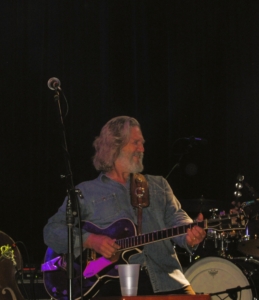
Jeff Bridges won a Best Actor Oscar for his sterling work as grizzled, alcoholic country music artist Otis “Bad” Blake. Blake struggles through midlife in a series of dingy hotels replaying his handful of hits for small bar crowds and living off his legend before connecting with Jean Craddock (Maggie Gyllenhaal), a beginning journalist looking for a profile. T-Bone Burnett breathes life into the classic country sound with the help of songwriter Stephen Bruton, who tragically died of cancer shortly before the movie’s release. Bridges, a lifelong musician, has a gravel-soaked timbre that made the soundtrack one of the better records of the year. “The Weary Kind,” the Burnett-Ryan Bingham composition sung by Bingham, won an Oscar for Best Song. (At left is a pic of Jeff Bridges from an August 2011 show at the Fox in support of his eponymous second album.)


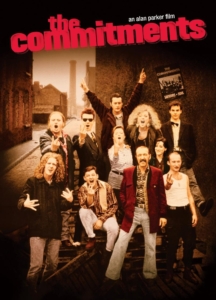
The Commitments (The Commitments, 1991)
Alan Parker’s excellent film, from a book by Roddy Doyle, examines the brief but entertaining life of a Dublin R&B band. The Commitments only play four gigs before fracturing after a spotlight for critics and Wilson Pickett of “In The Midnight Hour” fame ends with the drummer beating up the lead singer and Pickett showing up late. In their brief time together lead singer Deco Cuffe’s (Andrew Strong) overbearing personality alienates every other band member while trumpeter Joey “The Lips” Fagan (Johnny Murphy) beds each of the three female background singers. Manager Jimmy Rabbitte (Robert Arkins), a soul enthusiast who pulls the group together only to watch the disparate personalities combust, finds running things to be akin to herding cats. But it all comes together for three breathtaking minutes during a performance of the Dan Penn-Chips Moman classic “The Dark End of The Street,” a soul ballad first made famous by James Carr and later covered by Aretha Franklin, Linda Ronstadt, Ry Cooder and The Flying Burrito Brothers. That brief shining moment for The Commitments in front of a mesmerized crowd captures the ephemeral quality of the best live music, even if it is an overly brief reward for the hard work required to make it happen.


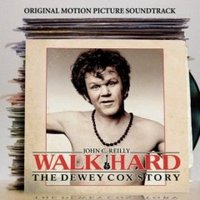
Dewey Cox (Walk Hard: The Dewey Cox Story, 2007)
Walk Hard: The Dewey Cox Story, written by Judd Apatow and Jake Kasdan, effectively blows up the music biopic genre. Using the Johnny Cash bio Walk the Line as a starting point, the movie makes fun of voluminous storytelling cliches. In fact, Walk Hard impacts the ability to enjoy the genre altogether; after watching one can’t view serious-minded dramatic renderings (e.g. Elton John, Queen) or documentaries (e.g. Billy Joel, The Eagles) without wincing at the deployment of the predictable elements. The traumatic childhood, the unsupportive parents/spouses, the discovery by a seasoned record producer, characters who always mention their name and the year to help viewers, the division of a career into specific periods, the inevitable fall and ultimate redemption of the artist–they’re all here. In addition to Johnny Cash, Walk Hard includes hilarious references to Sam Phillips, The Beatles, Brian Wilson and The Partridge Family. Real-life mirrors the movie: when Ozzy Osbourne died seventeen days after his final show in July, it was hard not to think of Dewey Cox, who famously dies twenty minutes after his comeback concert. Must viewing for music and parody lovers. 


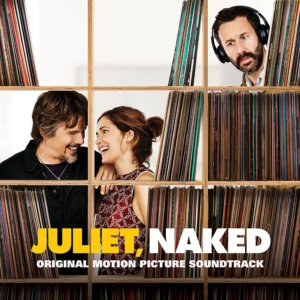
Tucker Crowe (Juliet, Naked, 2018)

Perhaps no twentieth century writer captures the intensity of music appreciation better than British author Nick Hornby, most famously known for High Fidelity. Juliet, Naked is a humorous, insightful look at the foibles of obsessive fandom. Duncan Thomson (Chris O’Dowd) runs a web site dedicated to Tucker Crowe (Ethan Hawke), a rootsy singer-songwriter who’s retreated into obscurity and stopped performing. When Crowe sends Thomson his long sought-after demos, Thomson’s frustrated wife Annie Platt (Rose Byrne) posts a negative review and winds up in an online dialogue with Crowe, with things developing to the point where the musician visits their southeast England town. The movie is mainly about the decline of Thomson’s and Platt’s relationship and uses the obsessed fan elements mostly for laughs even as they ring true. Hawke expertly portrays a broke, adrift musician hiding from the last embers of his notoriety (and multiple children by multiple partners) with pathos and humor, and the film ends on a hopeful note.

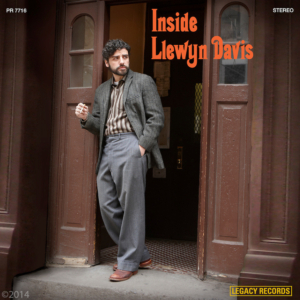
Llewyn Davis (Inside Llewyn Davis, 2013)
Sometimes the less you know about your musical heroes, the better. Llewyn Davis (Oscar Isaac) is a perfect example: a singer (loosely based on Dave Van Ronk) from the dawn of folk in Greenwich Village with talent that’s belied by an annoying, universally off-putting personality. Davis is there as the genre explodes but is unable to capitalize, much to his chagrin, which he makes sure every single person he comes into contact with knows. Inside Llewyn Davis is another in a long line of idiosyncratic Coen Brothers films with little in the way of resolution and an unlikable lead. But the music in the film, from Isaac, Carrie Mulligan, Justin Timberlake and Marcus Mumford, is consistently superb even as it’s undercut by the unpleasantness of spending time with the title character.


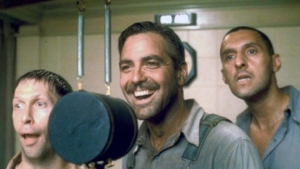
Soggy Bottom Boys (O Brother, Where Art Thou?, 2000)
Everyone has their favorite Coen Brothers movie–Fargo and The Big Lebowski have the most fans–but for me the duo’s pinnacle is 2000’s O Brother, Where Art Thou, whose soundtrack launched a folk and bluegrass revival and greatly expanded the fanbases of Alison Krauss, Gillian Welch and Chris Thomas King. Loosely based on Homer’s The Odyssey and full of memorable characters and lines, the story follows three Depression-era chain-gang-escapees who stumble into a recording studio and sing a few songs for blind DJ/record producer “Radio Station Man” (Stephen Root). The trio’s take on “Man of Constant Sorrow,” the folk classic first recorded in 1913, becomes a huge hit as the escapees journey to reclaim a lost treasure while evading a posse. The film culminates in a performance of the song for an enthused crowd stunned to see the trio in the flesh, following which incumbent, mid-campaign governor Homer Stokes (Charles Durning) pardons the group to curry favor with voters. The soundtrack to the film, produced by T-Bone Burnett,  is one of the biggest selling soundtracks of all-time and won three Grammys.


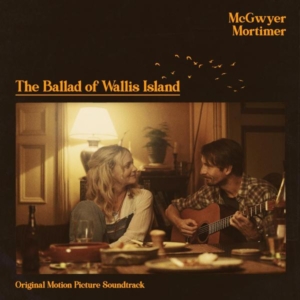
McGwyer Mortimer (The Ballad of Wallis Island, 2025)
Here’s a more recent example: 2025’s The Ballad of Wallis Island tells the tale of lottery winner Charles Heath (Tim Key, who starred in the wry, excellent British series The Detectorists) on a remote Welsh isle. Heath uses his windfall to reunite the folk duo McGwyer Mortimer, who’s brief turn in the spotlight was a shared love for him and his late wife. The duo show up separately only to find out that the magic, while still capable of briefly flickering, is in the past. McGwyer (Tom Basden) has never been able to replicate his success as a solo act, while Mortimer (Carrie Mulligan, in a throwback to her Inside Llewyn Davis role) has married, moved to Portland and abandoned the music business altogether. The attempted reunion doesn’t go as planned, and the film ultimately focuses on the two men trying to come to terms with the past. In the case of McGwyer, that means reconnecting with why he loves music, while with Heath it means accepting the loss of his spouse and moving on.


Mitch and Mickey (A Mighty Wind, 2003)

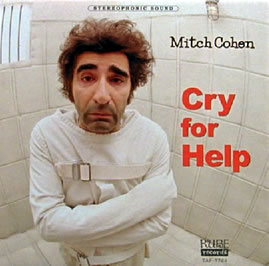
Christopher Guest took the improvisational, mockumentary spirit of This is Spinal Tap and mined it repeatedly. 2003’s A Mighty Wind, arguably his peak, spoofs the folk movement of the early sixties. Although a number of fictional acts are included–including The Folksmen, the same trio of actors in Spinal Tap–the centerpiece is Mitch and Mickey, played by, respectively, Eugene Levy and Catherine O’Hara. The long-dreamed-of reunion of the pair serves as the headliner of the PBS concert created to commemorate the passing of folk impresario Irving Steinbloom. In the decades since their split, Mitch has lapsed into a semi-catatonic state (pictured at right is one of his solo efforts) while Mickey plays catheter-themed songs to support her husband’s urology-focused business. Like the best fictional acts, the songs are just as good as what they aim to parody; in this instance, the tribute concert (and the film) culminates in a tender reading of “A Kiss at the End of the Rainbow,”  the love ballad that made stars of the pair. 


The Rutles (All You Need is Cash, 1978)
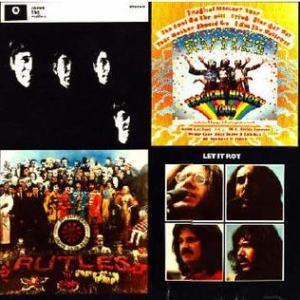
This is Spinal Tap was greatly influenced by All You Need is Cash, the 1978 profile of The Rutles, the “pre-fab four” that is a Beatles parody and homage. Written by Monty Python’s Eric Idle, the film features Mick Jagger and others speaking reverently about the group’s influence. But where Spinal Tap’s humor comes from poking fun at the imperfections of musicians and the tropes of music biopics, All You Need is Cash is more focused on replicating and spoofing The Beatles’ rise and fall. Segments specifically parody the “Paul is dead” craze, the “we’re bigger than Jesus” uproar, the visit to India, the rooftop concert, and so on. While it often underwhelms due to its overreliance on the Beatles chronology, the songs–created by Neil Innes of Bonzo Dog Band fame–hit it out of the park, mimicking the sound so well they could easily be confused for Lennon/McCartney originals. “Number One,” “Hold My Hand” and “Get Up and Go” are so infectious they could readily be added to the Beatles canon, and are so close to the source material that the music publisher forced Lennon’s name to be added to the composer credits after The Beatles had blessed the project. It may not stand up to repeat viewing, but the soundtrack is still likely to appeal to Beatles fans. 


Stillwater (Almost Famous, 2000)

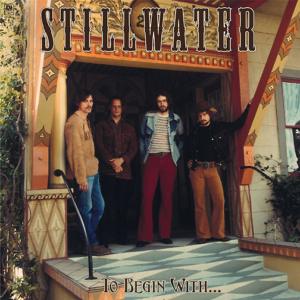
My favorite rock movie of all-time is Almost Famous, the 2000 autobiographical effort from writer/director Cameron Crowe that chronicles his time as a teenage journalist for Rolling Stone in the seventies. Crowe created Stillwater for the film, a composite group that combines elements of The Eagles, Led Zeppelin and The Allman Brothers Band. In the film Stillwater is, to quote Lester Bangs (Philip Seymour Hoffman) “a mid-level band struggling with their own limitations in the harsh face of stardom.” The group’s music, created by Peter Frampton and Crowe’s then-wife Nancy Wilson of Heart, is tasty seventies stadium rock. In a movie filled with great lines, this one from lead singer Jeff Beebe (Jason Lee) perfectly encapsulates the motivation of many classic rockers: “Some people have a hard time explaining rock’n’roll. I don’t think anyone can really explain rock’n’roll. Maybe Pete Townsend, but that’s okay. Rock’n’roll is a lifestyle and a way of thinking and it’s not about money and popularity. Although some money would be nice. But it’s a voice that says, ‘Here I am–and fuck you if you can’t understand me.’ And one of these people is gonna save the world. And the chicks are great.”  

Honorable Mentions:

Citizen Dick (Singles, 1992)

Daisy Jones & The Six (Daisy Jones & The Six, 2023)

Marie DeSalle (High Fidelity, 2000)

Drive Shaft (Lost, 2004-2010)

Troy Dyer (Reality Bites, 1994)

Hedwig and the Angry Inch (Hedwig and the Angry Inch, 2001)

Mouse Rat (Parks & Recreation, 2009-2015)

The Oneders (That Thing You Do!, 1996)

Sex Bob-Omb (Scott Pilgrim vs. The World, 2010)

Style Boyz (Pop Star: Never Stop Never Stopping, 2016)


Music Memoir Roundup

I am an absolute sucker for music-related memoirs. If you’re an artist I love and take the time to write a book, I can practically guarantee you I will read it. I don’t even have to like your music; if I think you have a compelling story to tell or someone I respect recommends your book, I’m all in. The book section at Paradise Found Records is always well-stocked with new and used titles. I previously wrote about some of my favorites of the genre. Here are five recent releases I’d recommend.

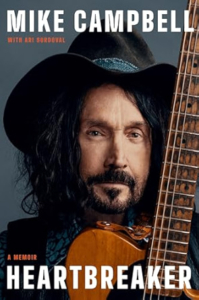
Mike Campbell–Heartbreaker, A Memoir

You may not know who Mike Campbell is but you know his music. As lead guitarist in Tom Petty and the Heartbreakers from the group’s inception, he co-authored some of Petty’s most popular songs and lent sterling guitar work to nearly every song Petty released in his long, illustrious career. Campbell is highly introverted and thus functioned as a perfect sideman: while contributing much to what made Petty one of the most successful American rock acts of the last fifty years, he was perfectly content to stay in the background and avoid the spotlight except for when he was adding screaming guitar solos to classics like “American Girl” and “Runnin’ Down a Dream.” Campbell was also willing to do some of Petty’s dirty work for him: when bandmates pushed back on what they felt was unfair compensation for their contributions, Campbell was the one to remind them that they were in the Tom Petty business, a fact he also had to remind himself of on occasion. Campbell’s memoir can be a little technical at times–multiple sections address his style with detail only a fellow guitar player can appreciate–but Heartbreaker is still required reading for all Petty fans. It’s an inside look at the journey from struggling Gainesville rock band to musical legends with a unique perspective only Campbell can provide, including on Petty’s tragic, unexpected passing at sixty-six in 2017.

Notable excerpt, regarding a classic song Campbell wrote for Mick Jagger: 

“Mick loved the song. But the next thing I knew, Tom said he wanted it for his record. I thought, what a coincidence; what interesting timing. But I was happy. I would have gotten a kick at having written a song for Mick, but that’s where my songs belonged, on Tom Petty records. I couldn’t wait to hear what he had done with it.

Tom wrote lyrics and brought it in a few days later. We set up with the whole band to run through it. I asked Tom what it was called.

“It’s called “You Rock Me.”

I stared at him.

“It’s called “You Rock Me?

“I know, I know.”

We played the song through with the whole band. It sounded great.

Benmont looked over at Tom.

“Are you singing, “You rock me?”

“Yeah.”

You rock me, baby?”

“Yeah.”

Benmont looked appalled.

“That’s just…” Benmont shook his head. “You can’t sing ‘you rock me, baby. You just can’t.’”

“I know, I know.”

Tom came back a few days later and said he’d fixed it. Steve kicked us off and we launched into the song. Tom stepped up to the mic and sang. Every word was the same. But when we played the chorus, instead of singing, “You rock me, baby,” Tom sang, “You wreck me.”

I shook my head. Incredible. Half a syllable, and it changed everything. How did he do it?”

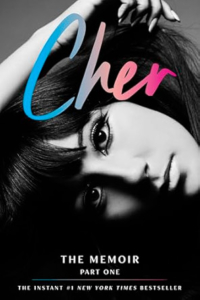
Cher–The Memoir, Part One

Cher might not fit the classic description of a rocker, but she was a member of the Wrecking Crew session band that played on many hits in the sixties and she worked extensively with Phil Spector. Part one of her memoir focuses on her first thirty-five years, including her launch into music and later TV stardom, and ends just as she begins acting (part two, covering the second half of her life, is due to be released this fall). In addition to its memories of an early life filled with amazing stories about growing up poor amidst Hollywood royalty, the book chronicles her rise and fall (and rise again) starting in the mid-sixties, when she parlayed her friendship with Sonny Bono into a highly successful career. Sonny and Cher struggled to break through until they visited the UK in 1965. Their hippie-gypsy hybrid fashion sense took the Brits by storm, knocking The Beatles (temporarily) off the top of the charts and paving the way for stardom when they returned home to Los Angeles. After a few years of hits, they were seemingly on the way to obscurity playing in nightclubs until, out of boredom as much as anything else, they added humorous banter to their stage show. As they finetuned the interplay, they transformed their act and ultimately created one of the most popular television variety shows of the seventies, hosting a who’s who of musical legends including David Bowie, Elton John and Bette Midler among many others. One revelation about the partnership: while Sonny Bono exploited her both financially and emotionally, Cher still harbors a surprising warmth for her longtime partner. 

Notable excerpt, regarding Cher’s joining the Wrecking Crew:

“One day in the summer of 1963, Darlene Love didn’t show up at the studio because her car had broken down. Phillip (Spector) was already behind schedule in recording the Ronettes’ next two singles, “Be My Baby” and “Baby, I Love You,” and this delay frustrated him. Time cost money, so he told everyone, “Let’s get something down anyway and I’ll play with it and see how it sounds. Sonny, you join the backup girls.” We all knew that if he asked for Sonny, he was desperate.

Undeterred, Sonny bounced up to the microphone like a puppy, and then I heard Phillip utter the words, “Okay, Cher, you too. Get up there. Sonny tells me you can sing.”

I almost fainted. Was he fucking nuts? Darlene was one of the greatest singers of all time. I’d be too low for the girls and too high for Sonny. I tried to explain my vocal qualifications to Phillip, but he interrupted me, saying “I don’t care, I just need noise. Get out there and sing.”

But what if my noise was off-key? I thought with a shiver. I stepped up to the microphone for the first time in my life and took my place next to Sonny, Fajita and Gracia. I was shaking so much I had to lock my knees together and fix my focus on the little speaker that allowed us to hear the rest of the song. There were no headphones at Gold Star; we all just played and sang. It was so intimidating. Phillip asked Gracia, “Okay, tell me what you’ll be singing,” and she went through her notes. When he did the same with Fanita, I thought I’d pass out on the floor if he asked me, as I wouldn’t have a clue what to say. I was planning on just listening to the girls and doubling up on Sonny’s part, then hiding until it was over. Thank God Phillip never asked, but then I think he kind of knew not to.

We were counted in and started singing, and somehow a sound came out that seemed okay. I didn’t know if it was luck or Larry’s skills. I began to relax, but then Phillip made everyone stop. “Cher,” he called. “Step back.” I wasn’t quite sure what he meant at first, but Sonny made a gesture for me to move away from the mic, so I took one step away and we started again.

Darlene was back in the studio the following day, and there was a collective sigh of relief. That woman was a force of nature, and still is, and the only one to stand up to Phillip if she didn’t like something. The moment she walked back in, she took one look at me standing in her place and shook her head. Then she threw it back and let out that great big laugh of hers as everyone exhaled. Then she looked at Sonny and said, “What you doing here?” She joined us at the mic, and when we started singing, the same thing happened as the previous day. “Step back, Cher. Step back,” Phillip instructed. “You’re still cutting through.” This went on and on until I must have been three feet from the others and virtually up against the wall. Eventually Darlene quipped, “She’ll be in Studio B at this rate!”

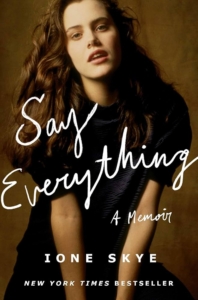
Ione Skye–Say Everything, A Memoir

Ione Skye might not be a musician, but she’s the next best thing, a rock’n’roll muse who has dated, married and/or inspired many successful artists. The daughter of famed British folkie Donovan, Skye is more widely known for an excellent film and television career that has seen her play featured roles with an eye for quality over commercial appeal. Skye entered into a long relationship with Anthony Kiedis of the Red Hot Chili Peppers when she was only sixteen and he was twenty-four, and stuck with him through his extended struggle with heroin (which he wrote about in “Under The Bridge,” the group’s breakthrough hit). She broke up with Kiedis just as he was on the brink of stardom to start a relationship with mutual crush Adam Horovitz, better known as Ad-Rock of The Beastie Boys, the group that played a huge role in bringing rap to a white audience for the first time. Skye later flirted with and then acknowledged her bisexuality, which is what ultimately ended her marriage to Horovitz. Through a film career that included working with a then-unknown Keanu Reeves and later John Cusack in arguably Cameron Crowe’s best movie, Say Anything, Skye slowly grows more comfortable in her own skin, culminating in developing a relationship with the father that abandoned her as a child and a still-going-strong union with Australian musician Ben Lee.

Notable excerpt, regarding the most iconic scene in Say Anything:

“As Cameron told me the day we met, Say Anything was very much a love letter to music. Throughout filming, there were endless discussions about what song should play when Lloyd boom box-serenades Diane outside her window. At the time, no one knew the scene would become iconic, but we knew it was significant–the “Romeo under the trellis” moment, as Cameron put it. He’d originally written the scene while listening to Billy Idol’s “To Be a Lover,” so that song made it into the first draft of the script, but we all knew it wasn’t right. After weeks of exchanging mixtapes, Cameron and Johnny decided Lloyd would blast “Turn the Other Way” by Fishbone up to Diane’s window.

Johnny and I were scheduled to film our respective sides of the scene on separate days, which I was glad about. Johnny was being cynical about the whole thing. He thought Lloyd’s grand romantic gesture would come off as cheesy. “Why does he have to hold the boom box up?” he kept arguing to Cameron. “It makes him subservient. I want to try it with the box on the car beside me and I’ve got my arms folded and I’m defiant. She broke up with me! I’m pissed!”

Cameron felt certain that Lloyd should be all in, not holding on to his cool by sitting down, but he agreed to shoot the scene both ways to keep the peace. (Lazslo later confessed to Cameron that he hadn’t bothered to load film into the camera for Johnny’s version; he was that sure Cameron was right.) Initially, they filmed on the street outside Diane’s house, but Cameron wasn’t happy with the footage. Later, we were doing the 7-Eleven scene where Lloyd brushes glass out of Diane’s path (a nod to the movie’s origin story), and Lazslo noticed a tree-lined stretch of park across the street. “That’s our boom box spot!” he said. “Quickly, before the sun goes down!” The crew rushed over to set up the shot, and with minutes to spare, Johnny did the scene, wielding his portable stereo like a dare. The mixture of heartbreak and defiance he brought to the moment made it perfect.

Well, almost perfect. When Cameron reviewed the footage, he realized the funky, raucous “Turn the Other Way” made Lloyd come off less as a thinking teenager’s heartthrob and more like a crazed Fishbone fan. So the song search began again. Eventually, Cameron would have an epiphany while listening to his wedding mixtape. When Peter Gabriel’s “In Your Eyes” came on, he knew it was the one. Three other films were vying for Gabriel’s big song, but Cameron went to the mat to get it, and the rest is history.”

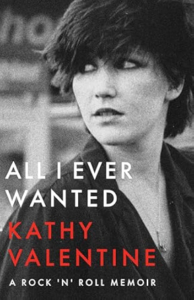
Kathy Valentine–All I Ever Wanted, A Rock’n’Roll Memoir
One of the more notable reunion sets at Coachella this year was by The Go-Go’s. While I can’t claim to be much of a fan, the fact is they were the first all-female group to top the charts with songs they’d written and performed themselves, an accomplishment that culminated in their induction into the Rock’n’Roll Hall of Fame in 2021. The group is known for their power pop and hits that included “We Got The Beat” and “Vacation,” but they emerged from the Southern California punk scene alongside bands like X and Black Flag. Valentine’s memoir is a surprisingly compelling look at a career in music, from her first being a fan of the band to the thrill of connecting with the other members and ultimately switching from bass to guitar to join up. The Go-Go’s were ahead of their time, and the book chronicles the group from early rehearsals through their fracture and ultimate reunion. Through it all Valentine struggles with a lifelong alcohol addiction that fogs many of her experiences and poisons her relationships with family and friends until she finally gets sober in her fifties. I can’t say it made me want to listen to more Go-Go’s, but I certainly respect them a lot more now.

Notable excerpt, regarding the impact of publishing royalties on band harmony:

“With a couple million records sold and being on the road for eight months straight, a significant payday was long overdue. At our accounting firm I sat on the edge of my chair in an office waiting for my check to be issued. Looking at it, I swooned. I had made over $300,000, almost $800,000 in present value. It was more money than I knew what to do with (of course, the accountants had ideas for that). My head reeled. I’ll buy a car! Definitely get a cool place to live. Almost out the accountant’s door, I turned back, suddenly curious. “Hey, what did everyone else get?” Surely it couldn’t be a secret. Everyone had busted ass to make the record sell. The numbers came: Charlotte, with most of the songwriting and the biggest hit, got a huge check. Next came Jane, just under Charlotte’s. My amount came next. Our lead singer, the star with the charisma and voice, made less than me, and Gina, the hardworking drummer who had turned the band into contenders, made the least. I had to let it swish around in the wash cycle of my brain for a while: this didn’t bode well for the band. The first real money had been paid, and there were some awfully big gaps.

It didn’t take long before I got the call. Gina had asked too. Our little drummer was a stick of dynamite, her fuse always lit and ready to explode. Most of the time that meant just playing with all her heart and soul, like a machine, making every ounce of her energy pour into her limbs and onto her drum kit. Other times it meant being a manic, loudmouthed ballbuster, yelling out truths most people would rather not hear. Gina had a straightforward world view: hard work pays off; be loyal and fair; honor your family and friends. The discrepancy in our earnings violated her sense of justice, and I couldn’t blame her. It gave me a big problem because everyone had to be happy and it had to be fun, or else all would be lost. My number-one priority had become keeping the band intact. I was living the experience of a lifetime and I wanted it to last.

Some issues aren’t clear-cut, black and white, one way is right and one way is wrong. I’ve had a lot of years to think about songwriting and income issues in bands and have my thoughts and opinions about it, but that’s all they are. There’s no law or manual. In the case of the Go-Go’s, the money issue became like a sixth unwanted member, always in the room.”

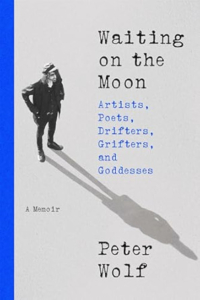
Peter Wolf–Waiting on the Moon: Artists, Poets, Drifters, Grifters, and Goddesses
Peter Wolf was first known to some as Woofa Goofa, the late-night rock disc jockey on Boston’s WBCN in the sixties; later he became the lead singer of the J. Geils Band, the Boston band that mixed rock and R&B and struggled to break through commercially for ten records before finally hitting the top ten with “Centerfold” and “Freeze Frame” in the early eighties. Wolf’s excellent new memoir contains surprisingly little about the J. Geils Band; instead, it is a fascinating look at the life of a painter, singer and first and foremost culture fiend. Wolf saw and hung out with Bob Dylan in the clubs, lived with David Lynch in college, married Faye Dunaway, and spent serious time carousing with Van Morrison, Keith Richards, Mick Jagger and many other musicians, poets, professors and playwrights that drove American art in the second half of the twentieth century. Above all else Wolf is a lover of the blues. His stories of hanging out with Muddy Waters, James Cotton, Howlin’ Wolf and John Lee Hooker reveal an aesthete who was both a fellow traveler and fan. His roles as DJ and rock star helped him become close friends with many of his idols, and this highly entertaining book is filled with engrossing stories and encounters that make it very hard to put down.

Notable excerpt, on hanging out on Willie Nelson’s bus:

“Willie and his mentor, the eighty-one-year-old honky-tonk pioneer Ray Price, were in the front lounge passing each other a large vape pipe attached to a hookah sitting on a table in front of Willie. Ray, once roommates with Hank Williams, was an important originator of the real whiskey-soaked honky-tonk sound, with a young Willie Nelson on bass in his band.

“Hey, Merle (Haggard), what’s in that bottle you’re holding?” Ray asked. “How about giving my coffee a bit of a booster shot?”

“Same for me,” said Willie. I thought Willie had stopped drinking, but maybe this was a special occasion. Merle obliged and said, “Pete, grab yourself one of those coffee cups and let me give you a refill.” They passed the pipe to Merle, who held on to it, taking several long, deep inhales.

“We just did some recording, and Pete here set up a whole studio in the dressing room.”

“Hope it’s a hit,” Willie said.

Merle continued chatting as he reluctantly handed back Willie’s pipe after I passed on having some. Merle began telling a story about the first time I met his longtime right-hand man, Fuzzy Owen, one of the architects of what became known as the Bakersfield Sound in country music. Merle said, “One night Pete came to my show and joined me and the band in catering. Pete sat right across the table from Fuzzy, and I introduced him. He seemed really excited about meeting Fuzzy, so he starts asking Fuzzy all sorts of questions about how he produced his records back in the day, how big the studios were, what kind of microphones he used, what amplifiers did the players have, all sorts of questions. Fuzzy just kept nodding his head and sometimes just saying, “Yes, sir, them sure was the good old days.’ Pete keeps asking Fuzzy questions, and Fuzzy just keeps nodding his head, until I finally had to break in and say, ‘Pete, you’re just wasting your breath. He ain’t got on his hearing aids. Fuzzy’s stone deaf. He can’t hear one damn word you’re saying!’”

Both Willie and Ray started laughing as it was the funniest thing either of them had ever heard.”

Grateful Dead Studio Albums From Worst to First

2025 marks the sixtieth anniversary of the formation of the Grateful Dead, an American musical institution still thriving all these years later. Dead and Company, featuring original members Bob Weir and Mickey Hart, just finished an extended run at The Sphere in Las Vegas. Bill Kreutzmann, the only other surviving original member, still gigs occasionally in Hawaii (where’s he’s retired) with Billy and the Kids. Boulder has always been Deadhead Central; we may not have the most fans by volume, but we’ve been number one in Deadheads per capita for a long time.

The Dead are marking the feat with Enjoying The Ride, a sixty-CD collection that includes twenty-five shows from some of their favorite venues (including Red Rocks, pictured above). There is also a smaller box set of excerpts, The Music Never Stopped, out in 6LP and 3CD formats. And Dead and Company is playing three sold-out Golden Gate Park concerts in August for (natch) 60,000 fans per night. 

So what is it about the Dead that makes them arguably the most successful American musical act of the last sixty years? Few artists have spawned more cover acts or been honored more. Last December the band was recognized at The Kennedy Center Honors, followed in January by a MusiCares tribute over Grammy weekend. Jam bands and non-jam bands cover their material and there have been numerous tribute albums. The stereotypical view of their music may be acid-fueled exploratory jams just as the stereotypical view of their fans may be long hair, but neither fully reflects what’s made the group the leading icons of the sixties counterculture.

When examined en masse, it’s easy to see an obvious thread running through their studio oeuvre: a consistent struggle to translate the group’s concert magic into a representative sound within the confines of a production setting. The Dead’s most unique skill was their ability to form a hive mind through improvisational jamming wherein the different components weaved in and out of each other to create an unique hybrid of jazz and rock. Perhaps it’s not surprising that Grateful Dead studio releases more often than not failed to achieve the liftoff accomplished when the members were clicking onstage.

To help newbies navigate a large and intimidating discography, here are their studio albums ranked from worst to first.

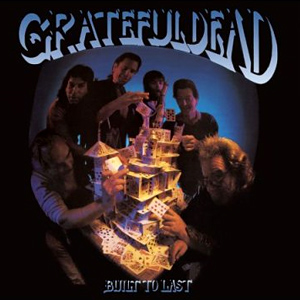
Built to Last (1989)

In the wake of Jerry Garcia’s near-death in 1986, the Dead experienced a huge boost in popularity, fueled by the huge commercial success of “Touch of Grey.” Suddenly the band filled stadiums with newbies cynically called “Touchheads” by Deadheads. So how did they follow up this long-awaited commercial success? Curiously, by making a record in which they greatly minimized intraband interaction. Built to Last was created largely by having the members exchange parts, each adding their contributions one at a time; maybe they thought this was cutting edge? They also opted to let keyboardist Brent Mydland–who would be dead from a drug overdose within a year–contribute four songs. And while two of those compositions, ”Just a Little Light” and “Blow Away,” are his strongest, the album still bombed. Like their performance at Woodstock, which included an abbreviated “St. Stephen” and a forty-minute “Turn On Your Lovelight,” Built to Last is notable primarily as an example of the group failing to take advantage of a huge opportunity to make an impression.

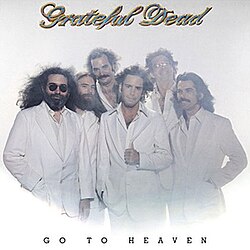
Go To Heaven (1980)

Go To Heaven features many tracks that became an essential part of the Dead’s eighties musical repertoire. Its horrific cover was inspired (I believe) by a lethal combination of disco, cocaine (the drug of choice at the time) and a failed attempt to be punny. Along with two soft-rock efforts by then-new keyboardist Mydland, the production wrings the life out of every song. “Don’t Ease Me In” dispenses with jamming in the hope of achieving radio play while “Lost Sailor,” a song highly reminiscent of  earlier Bob Weir composition “Looks Like Rain,” features a protagonist too easily imagined as one of the group’s more drug-addled fans. But the absolute low point is “Feel Like a Stranger,” an R&B song that sounds like the Average White Band on quaaludes with an abrupt ending that doesn’t come nearly soon enough. How something so good live could be rendered so insipid in the studio is no small achievement. 

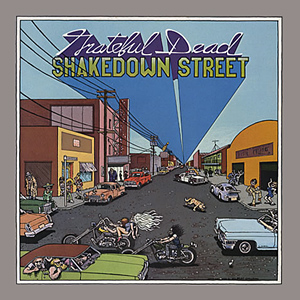
Shakedown Street (1978)

Featuring a classic cover by underground comic artist Gilbert Shelton of Fabulous Furry Freak Brothers fame, the last Dead album of the seventies was produced by Little Feat founder Lowell George. To aid in the continued search for commercial success, George watered down much of the material and substituted polish for heart. Opener “Good Lovin’” abandons the lengthy blues presentation from when Pigpen sang it for a radio-friendly gait closer to The Young Rascals hit (which was itself copied from The Olympics’ arrangement of the original single by Lemme B. Good). “Fire on the Mountain,” which usually lasted ten-plus minutes live, is squeezed into four minutes. The title track might’ve become an anthem in concert, but here it’s sped up in an attempt to capitalize on the disco fad. The remake of “Minglewood Blues” pales next to the high energy of the cover from the group’s debut, and album closer “If I Had the World to Give” is one of Garcia/Hunter’s weaker ballads and was only performed live three times. As is the case with so many Dead studio albums, Shakedown Street casts strong material in a weak light.

Aoxomoxoa (1969)

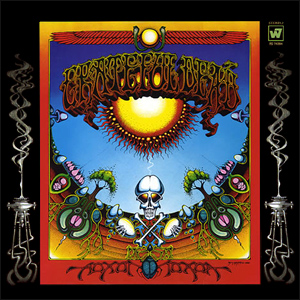
Perhaps no band is more associated with recreational drug use than the Grateful Dead. They got their start as the house band at Ken Kesey’s Acid Tests, and their debut is noticeably influenced by the consumption of speed. Unfortunately, nitrous oxide was the drug of choice for Aoxomoxoa, their third studio effort. The result is a confusing mess that weakens the power of the classic “St. Stephen” and mires “China Cat Sunflower” in a flower-power jumble. “Dupree’s Diamond Blues” marries highly misogynistic lyrics to a calliope effect that sounds like something from a carnival sideshow. But the true nadir has to be the unlistenable “What’s Become of the Baby.” Jerry Garcia and Phil Lesh soon realized the error of their ways, and in 1971 returned to the studio to remix the record and remove a number of its effects.

Terrapin Station (1977)

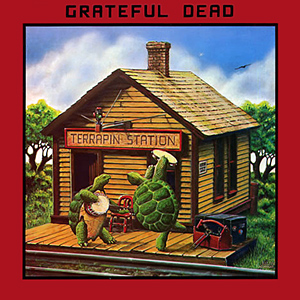
In 1976 famed record honcho Clive Davis signed the Dead to his new label, Arista Records, with the hope of helping them finally achieve mainstream success. To accomplish this goal he paired them with producer Keith Olsen, who had worked with Fleetwood Mac to create the eponymous record that would transform that band’s career. The result is a curious hodgepodge. While it contains some excellent material, most notably the title track and Bob Weir’s “Estimated Prophet,” it is horribly overproduced and applies a studio sheen that runs counter to the group’s spirit. The title track covers all of side two and is an enchanting, multi-part journey with some of lyricist Robert Hunter’s most evocative storytelling, orchestral and choral flourishes and a fiery, percussion-driven jam near its end. At the other extreme, the cover of Motown classic “Dancing in the Street” is simply embarrassing.

Anthem of the Sun (1968)

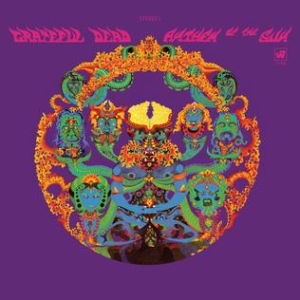
The Dead’s second album incorporated live recordings and is as psychedelic as they got in the studio. Producer David Hassinger famously exited after being asked to add “thick air” to the sound. After the dizzying speed of the debut, the band leaned into their stage persona and embraced long improvisational sections and Pigpen-led blues rave ups. The record is notable for being the first to entirely feature compositions written by band members. The opener, “That’s It For The Other One,” became one of their most oft-played live numbers in the ensuing decades, although other songs on the record made few if any onstage appearances after 1969. Anthem of the Sun introduced their psychedelic ethos to listeners unfamiliar with the live act and deployed studio effects that made it far ahead of its time. Sections feature multiple live samples interspersed and overlaid in a manner that brings the music in and out of focus much like the acid trips it was performed to.

Wake of the Flood (1973)

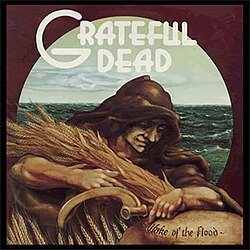
The Dead’s sixth studio release was the first on their own record label. In true hippie spirit, the band considered selling it via ice cream trucks as a new, unique distribution method. The songs on Wake of the Flood are uniformly excellent, foundations for long, extended jams that quickly became the highlights of any show in which they were performed. The problem with the studio versions is that the songs are shortened with emotionless vocals and questionable instrumentation. “Eyes of the World” is a shell of the jamming vehicle it evolved into live; “Stella Blue” contains some of  Robert Hunter’s most evocative lyrics but includes none of the pathos so endemic to Jerry Garcia’s vocals on his quieter ballads. “Mississippi Half-Step Uptown Toodeloo” adds violin but similarly misses the potential it reached onstage. And Keith Godchaux’s only contribution to a Dead record, “Let Me Sing Your Blues Away,” is a novelty at best. 

Grateful Dead (1967)

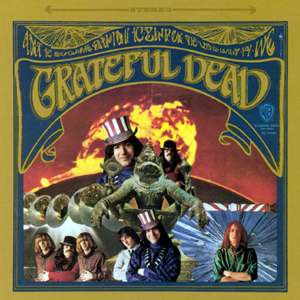
The Dead’s debut is a curious concoction. Recorded in only four days in Los Angeles under the noticeable influence of amphetamines, seven of its nine tracks are covers. The lone group composition, “The Golden Road (to Unlimited Devotion)” is credited to McGannahan Skyjellyfetti, while “Cream Puff War” is Jerry Garcia’s sole attempt at writing lyrics (his partnership with lyricist Robert Hunter began with the group’s sophomore release). Yet the record still has its unique charms. Thanks to all that speed it is furiously upbeat, and even a slow ballad like “Morning Dew” gets played at a faster pace than its live renditions. The album culminates with a ten-minute jam on Noah Lewis’s “Viola Lee Blues,” first performed in 1928 by Cannon’s Jug Stompers, that spirals into the first extended improvisation the Dead committed to vinyl, with Garcia soloing at breakneck speed. Released in March of ‘67, Grateful Dead was the soundtrack to the Summer of Love.

In the Dark (1987)

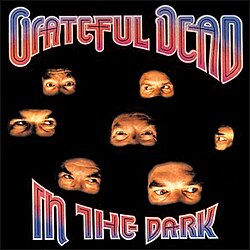
In the Dark, released in the wake of Jerry Garcia’s near-death from a diabetic coma in 1986, contained mostly material the group had been playing for years before his illness. But the renewed interest in the group and their biggest/only Top Ten hit, “Touch of Grey,” spurred a popularity that has only increased in the thirty years since Garcia died from a heart attack at fifty-three in 1995. In addition to its lone hit, the record includes two of Bob Weir’s better compositions: “Hell in a Bucket,”  a straightforward rocker that opened many shows thereafter, and “Throwing Stones,” as close to a political song as the Dead got outside their cover of Bonnie Dobson’s “Morning Dew,” about the aftermath of a nuclear holocaust.


Ace (1972)

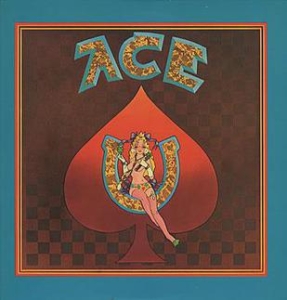
Ace is billed as a Bob Weir solo record, but his backing band on every track is the Dead, so it merits inclusion on this list (Jerry Garcia’s solo Reflections also features the Dead as backing band on a handful of tracks). Ace is 100% a Grateful Dead record, albeit with strictly Weir compositions. In fact, Ace features the track that sees the group come closest to capturing their live spirit in a studio setting, the nearly eight-minute “Playing in the Band” (the live version on Grateful Dead aka Skull and Roses has no jam at all). The album isn’t perfect thanks to the cheesy mariachi horns of “Mexicali Blues,” but still features some of the best collaborations between Weir and lyricist John Perry Barlow, most notably “Black-Throated Wind” and “Cassidy.” “One More Saturday Night,” the penultimate track, is one of Weir’s few attempts at writing his own lyrics.

Blues for Allah (1975)

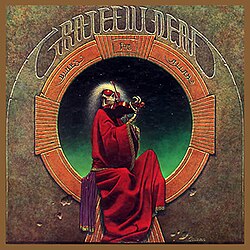
Burned out by constant touring, in late 1974 the Dead embarked on a nearly two-year performing hiatus; in 1975 they played only three shows, all in their San Francisco backyard. They returned here with renewed energy. Side one is as good as anything they did in the studio. The trio of “Help on the Way,” “Slipknot” and “Franklin’s Tower” kick things off with a burst of energy, with complex, jazzy jamming and the infectious bounce of the last song in the triad. “The Music Never Stopped” and “Crazy Fingers” similarly match Hunter’s lyrical prowess to strong melodies; the latter is the closest the Dead ever got to reggae. Side two peters out somewhat in a series of more spacey explorations, but not enough to lessen its overall appeal. 


From the Mars Hotel (1974)

The group’s seventh studio release is the only one that comes close to reaching the heights of the one-two punch of 1970’s Workingman’s Dead and American Beauty. Apart from Bob Weir’s tepid “Money Money,” the album finds the group firing on all cylinders with notable contributions from the songwriting duos of Garcia/Hunter and Lesh/Petersen. The former’s “Scarlet Begonias” became one of the Dead’s most-beloved songs with its romantic lyrics and spirited, open-ended jamming, while the latter’s “Unbroken Chain,” never performed live until shortly before Garcia’s death, marries a hypnotic melody to a complex middle section that hinted at Blues For Allah‘s melodic fusion. Add classics “Ship of Fools,” “U.S. Blues,” “China Doll” and “Loose Lucy”–all songs that elicited strong fan responses in concert–and the result is one of the few studio Dead records that even a non-Deadhead will appreciate. 

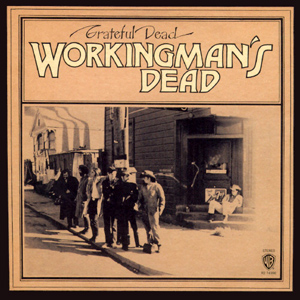
Workingman’s Dead (1970)

As the seventies dawned, the folk-rock of Southern California was taking the world by storm. First hatched by The Byrds, The Mamas and The Papas and Buffalo Springfield a few years prior, the genre took a big step forward with the debut release by Crosby, Stills and Nash in 1969. That album’s three-part harmonies greatly influenced the Dead, who did a 180 from the extreme psychedelia of 1969’s Live/Dead, their first live album, and instead opted for shorter, harmony-drenched compositions. Workingman’s Dead surprised fans but also captured a lot of new ones with its anthemic “Uncle John’s Band,” lilting “High Time” and country-tinged “Dire Wolf.” “New Speedway Boogie” speaks to the carnage at Altamont, “Easy Wind,” the only song the Dead did with both music and lyrics by Robert Hunter, features a funky Pigpen lead vocal, and “Casey Jones” closes the album in memorable fashion. The Garcia/Hunter partnership took a giant leap forward here.

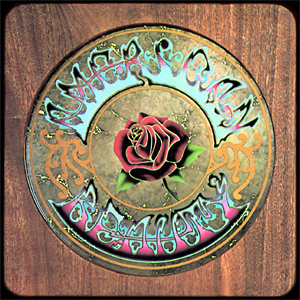
American Beauty (1970)

Workingman’s Dead may have been the album where the Dead took a sharp turn towards folk-rock and CSN-style harmonies, but American Beauty–released less than six months later–is where they reached their studio and songwriting apex. Three of their most widely-known songs–“Sugar Magnolia,” “Ripple” and “Truckin’”–are included. Garcia and Hunter also penned two of their most beautiful, resonant tracks, “Brokedown Palace” and “Attics of My Life,” while Hunter wrote the words for Phil Lesh’s album-opener “Box of Rain”  to help the bassist deal with the impending death of his father. Add in the David Grisman-aided “Friend of the Devil” and loping “Candyman” and you have a perfect record without a wasted second. If I was going to try to turn someone on to the Grateful Dead, this is where I’d start.


Top Five: Bob Dylan’s Best Records

It was only a matter of time before Bob Dylan received the conventional Hollywood biopic treatment. The recently released A Complete Unknown is a thrilling romp through the first few years of his career culminating with his controversial 1965 Newport Folk Festival appearance, where he outraged folk purists by plugging in and rocking out. Telling Dylan’s true story has never been easy; the man himself plays around with how others perceive him every chance he gets. 

A Complete Unknown was directed by James Mangold, most famously known for his lauded Johnny Cash biopic Walk the Line. And while it unsurprisingly takes more than a few artistic and historical liberties in the service of accessibility and narrative, it largely hews to the reality of Dylan’s first few years of notoriety. This is in direct contrast to Martin Scorsese’s Rolling Thunder Revue: A Bob Dylan Story, the 2019 film about Dylan’s traveling caravan which “documented” the famous 1975-76 tour that included a Fort Collins stop by adding fictional elements, most specifically conversations with hangers-on who in actuality weren’t there.

Like The Beatles, that other leading musical force of the sixties, Dylan has been over analyzed ad nauseum. But unlike the Fab Four, who stopped putting out albums together in 1970, Dylan’s steady stream of new material and decades-long Never Ending Tour has kept him top of mind for sixty five years. His ubiquity makes him a relevant part of the musical knowledge of any one over a certain age, but hopefully A Complete Unknown exposes him to a younger audience. Much in today’s culture is influenced by him and he can legitimately lay claim to being the most important American musical artist of most living people’s lifetime. He is also the only songwriter to win the Nobel Prize in Literature.

Not counting live and archival releases–of which there are many–Bob Dylan has released forty (!) albums since his 1962 debut. With rare exceptions all have been original material. To help newbies navigate this intimidating discography, here are his five best albums. Picking just five is no small feat; while he has not always maintained his high standard, much more than half his output is highly rewarding and many critics count his misfires in the single digits. In chronological order: 

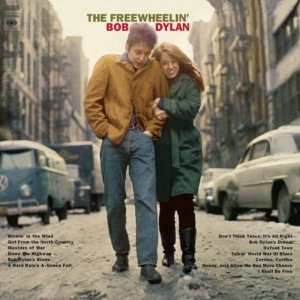
The Freewheelin’ Bob Dylan (1963)

Dylan’s first four records were almost entirely acoustic affairs, and his eponymous 1962 debut features only two original compositions. Its follow-up, The Freewheelin’ Bob Dylan, features twelve originals with only a single cover, and first demonstrates the skill that made him the greatest lyricist of the twentieth century. Some of his most well known, oft-covered songs are here, among them “Blowin’ in the Wind,” “A Hard Rain’s A-Gonna Fall” and “Don’t Think Twice, It’s All Right.” The album also features the classic cover shot of Dylan and then-girlfriend Suze Rotolo depicted in A Complete Unknown.


Blonde on Blonde (1966)

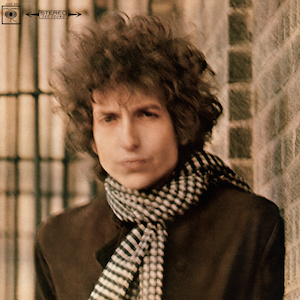
The first double-album Dylan released was his third with electric guitars. After a failed attempt with The Hawks (later known as The Band) as backup, Dylan instead leaned on Nashville studio wizards to create the most sophisticated-sounding music he’d made up to that point. Al Kooper’s organ is a big part of the sound, an ironic touch considering Kooper only moved to the instrument after the much better Mike Bloomfield (who had accompanied Dylan at that famous Newport performance) showed up to play guitar at the session. Blonde on Blonde contains two of Dylan’s earliest cracks at long ballads, “Visions of Johanna” and “Sad-Eyed Lady of the Lowlands.” It kicks off with the raucous “Rainy Day Women #12 and #45” (with its chorus “Everybody must get stoned”) and also features the tender “Just Like a Woman” and uptempo “Stuck Inside of Mobile with the Memphis Blues Again.” With no weak spots among its fourteen tracks, many would argue this is Dylan’s finest hour.

Nashville Skyline (1969)

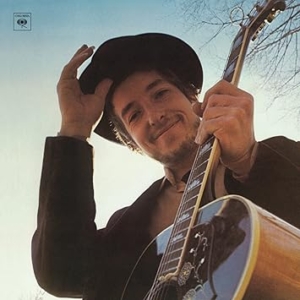
The Byrds and Gram Parsons may have trailblazed the country rock sound later popularized by The Eagles, but Dylan broke barriers less than a year after Sweetheart of the Rodeo by exposing his rock and folk followers to country. Starting with a duet with country legend Johnny Cash on his classic “Girl from the North Country,” which first appeared on The Freewheelin’ Bob Dylan, Nashville Skyline is another effort recorded in Nashville using Nashville cats and features Dylan affecting a baritone previously not in his vocal arsenal (which he achieved in part by ending a cigarette habit). “Lay Lady Lay” was Dylan’s biggest hit since “Like a Rolling Stone.” Other classics including “I Threw It All Away” and “Tonight I’ll Be Staying Here With You” are part of the album’s too-brief twenty-nine minute running time.

Blood on the Tracks (1975)

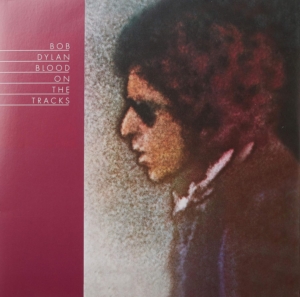
Dylan’s “breakup” album, made in the wake of the dissolution to his marriage to Sarah Lowdnes (the subject of “Sad-Eyed Lady of the Lowlands”), is arguably the best album ever about heartbreak. Blood on the Tracks cycles through the different stages of grief over love lost, from longing and sentimentality (“Tangled Up in Blue”) through anger and pain (“Idiot Wind,” “You’re a Big Girl Now”) to acceptance and  gratefulness (“Buckets of Rain,” “Shelter From the Storm”). Anyone who’s had their heart broken will recognize the emotions Dylan captures with such depth here, although it’s hard to imagine them being put into words more powerfully.


Time Out of Mind (1997)

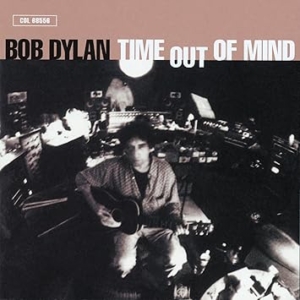
Dylan’s stature naturally waned as grunge exploded and hip-hop ascended in the mid-nineties. This “comeback” album refocused attention on him and marked the beginning of an impressive second arc of his career that has flowered through 2021’s Rough and Rowdy Ways. Working with French Canadian Daniel Lanois, who’s produced popular records–sometimes in partnership with Brian Eno–by U2, Emmylou Harris, Peter Gabriel and many others, Dylan rediscovered his mojo in a haunting, swampy sound set to his best set of lyrics in years. Leading off with the desolation, weariness and menacing rhythm of “Love Sick,” the self-reflective shuffle of “Dirt Road Blues” and the heartache and resignation of “Standing in the Doorway,” Time Out of Mind was Dylan’s biggest success in decades.


The Next Five: Bringing it all Back Home (1965); Highway 61 Revisited (1965); The Basement Tapes (1975); Desire (1976); Love and Theft (2001)


Top 20 Records of 2024

Welcome to the year-end edition of the Paradise Found Records blog. It was another great year for music and for Paradise Found. Our Boulder and Petaluma locations continue to thrive, with more in-store performances and album signings than ever before. We couldn’t do it without you, our loyal customers. We love seeing your smiling faces and it makes our day to share music–new and old–with you!

There are good years for new music and there are great years for new music, and 2024 definitely fit the latter category. It seemed like high-quality new albums were released every week. Sometimes the release method itself was part of the story: Cindy Lee’s Diamond Jubilee was originally only available via download or as a two hour uninterrupted YouTube stream, while Jack White dropped his latest album without warning by giving it away at his Nashville and Detroit Third Man Records retail stores. Elsewhere, Chappell Roan, whose debut came out in September 2023, experienced the most meteoric rise by any act in recent memory. Over just a few months, Roan went from relatively unknown to headliner status playing late afternoon festival stages to packed crowds that didn’t always stick around to see whomever was top billed. At Coachella in April she performed in a tent for a few thousand fans; by Lollapalooza in July the difference in crowd size and enthusiasm had grown exponentially. Between her pure pop and over-the-top, drag-influenced presentation that referenced the eighties and disco with equal aplomb, Roan’s overnight success ten years after her first YouTube video was the story of the year. No album flew off the shelves here faster this year.

Coming up with just twenty favorite releases of the year was a challenge. My favorite album, Hurray for the Riff Raff’s The Past is Still Alive, reveals new depths with each listening and tells a story that is both topical and timeless. But any one of several others on my list could’ve been number one. Here are my top ten in alpha order, followed by the next five and my five favorite archival releases. Everything on this list available in our stores or online.

Brittany Howard – What Now

Howard’s sophomore solo album since her days leading Alabama Shakes embraced the bass, moving beyond the rock that permeates her prior work to create what sounds like a great unearthed Prince album. She made room for gospel touches on opener “Earth Sign” and “Red Flags” but largely focused on funk, eschewing her notable guitar skills as she expanded her palette and paid tribute to the Paisley Park sound. (Favorite track: “Every Color in Blue”)


Cindy Lee – Diamond Jubilee

This two-hour-long double album by Cindy Lee (aka Patrick Flegel from the band Women) leans into a production quality that embraces a Pet Sounds-era aesthetic. Only available currently via Bandcamp, Geocities and YouTube, Diamond Jubilee will finally get a vinyl release in February. Its blend of distant vocals, extended instrumental breaks, and dreamy psychedelic pop brings to mind a lo-fi Beach House.  (Favorite track: “Glitz”)


Hurray for the Riff Raff – The Past is Still Alive
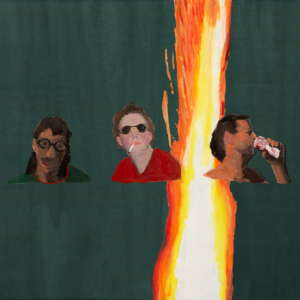
Alynda Segarra’s latest effort is the culmination of an underappreciated career that draws on time spent hopping trains and busking on street corners with a keen eye for the challenges faced by the impoverished and disenfranchised. Segarra retains enough hope to draw a line from a dying species to a new love (“Buffalo”) before concluding that they feel like the band on the deck of the sinking Titanic, watching “the world burn with a tear in my eye.” (Favorite track: “Buffalo”)


MJ Lenderman – Manning Fireworks

Asheville-based MJ Lenderman had quite the year. His band, Wednesday, played to increasingly larger crowds and growing critical acclaim. His guitar work and vocals added much to Waxahatchee’s newest album, and his fourth solo studio effort is his best yet. Starting quietly with the plaintive folk of the title track and culminating with the Neil Young-inspired shredding and feedback-drenched metal machine music of “Bark at the Moon,” Manning Fireworks is a beguiling slice of Americana. (Favorite track: “Wristwatch”)


Father John Misty – Mahashmashana

Josh Tillman’s fifth album (the title means “great cremation ground”) is a return to form after the slight drop-off of his last two LPs. The themes of societal decline, aging gracefully and navigating Los Angeles traffic–literal and political–remain from his best work, but musically he ventures into harder rock (“She Cleans Up”) and funk (“I Guess Time Just Makes Fools of Us All”) for the first time. At his best as on the majestic opening title track, Misty writes songs to help listeners navigate their own end of days. (Favorite track: “I Guess Time Just Makes Fools of Us All”) 


St. Vincent – All Born Screaming

St. Vincent’s last album, 2021’s Daddy’s Home, was an R&B seventies tribute made in response to her father’s release from prison that conjured Stevie Wonder and Pink Floyd. Here she returns to her comfort zone with angrier, edgier lyrics and an emphasis on beats and synthesizers. She also uses strings for “Violent Times,” which sounds like a soundtrack for some imaginary, yet-to-be-made movie about the decline of Western civilization. (Favorite track: “Sweetest Fruit”)


Vampire Weekend – Only God Was Above Us
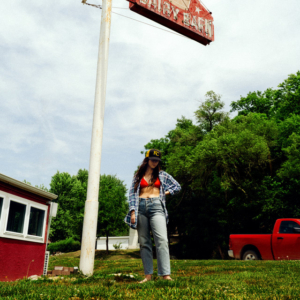
The departure of Rostam Batmanglij after 2013’s Modern Vampires of the City left co-leader Ezra Koenig searching for his own style; follow-up Father of the Bride was a transitional effort aided by the Haim sisters and an expanded group of musicians. Koenig regains his confidence and ventures in exciting new directions on Only God Was Above Us. The existential angsty lyrics set against cheery, polyrhythmic melodies are still there, but this is the sound of a new, more dissonant and intricate Vampire Weekend. If new parenthood has taught Koenig anything, it’s to let it go, which he preaches for eight minutes on the album’s ultimate and best track. (Favorite track: “Hope”)


Waxahatchee – Tiger’s Blood

Katie Crutchfield’s stellar 2020 St. Cloud grappled with her newfound sobriety but added a melodicism that helped break her to a wider audience, a success delayed by the pandemic’s shuttering of venues. Her follow-up is equally melodic and more mature, a logical next step toward festival headlining slots. Her unique Americana recalls a less Southern-fried  Lucinda Williams, but with a richness all her own. (Favorite track: “Right Back to It”)


Gillian Welch and David Rawlings – Woodland

Gillian Welch is the opposite of prolific; Woodland is her first record of original material in thirteen years and only her sixth since her 1996 debut. It’s also her first album to be co-billed with partner/guitarist David Rawlings and continues her streak of excellence. This is timeless music, simple folk that is evocative and sounds like it could’ve been created before the invention of electricity and amplification. Welch and Rawlings make music that sounds highly manicured while still steeped in Appalachian roots, seemingly designed to be sung around a campfire. (Favorite track: “What We Had”)


Jack White – No Name

Jack White’s six solo studio albums have all continued the blues passion and whimsical folk that brought him fame with The White Stripes. His latest and best solo effort yet is a sonic blast of garage rock that forsakes all subtlety and softness in favor of volume and high energy. White followed its release with an extensive tour of small venues announced shortly before each show, reinforcing the album’s impromptu-style release and ethos of “turn it up and play it loud so the neighbors complain.” (Favorite track: “What’s the Rumpus?”)


Next five: Nick Cave — Wild God; Kim Deal — Nobody Loves You More; Jessica Pratt — Here in the Pitch; Wilco — Hot Sun Cool Shroud; Tucker Zimmerman — Dance of Love

Top Five Archival Releases

Bowie–Rock’n’Roll Star!

This 5CD box provided an inside look at the creation of Bowie’s best  album, The Rise and Fall of Ziggy Stardust and the Spiders from Mars. Starting with a San Francisco hotel room recording of what would become “Moonage Daydream” and continuing through a brief stint with The Arnold Corns alongside demos, BBC and live recordings, this is a fascinating, in-depth look at the workshopping and development of what would become one of the most beloved rock albums of all time. (Favorite track: “Star (aka Stars)”)


Crosby, Stills, Nash and Young–Live at Fillmore East, 1969

This September 1969 concert, recorded a month after their famed second live performance at Woodstock, finds one of the original supergroups honing their live act and integrating newest member Neil Young. The strength of the songs has not faded with time, and those harmonies! Come for the first album of acoustic songs, including a nearly nine-minute “Suite: Judy Blue Eyes.” Stay for the raging sixteen-minute “Down by the River” with Young and Stephen Stills trying to outduel each other on extended guitar solos. (Favorite track: “Down By The River”)


Joni Mitchell – Archives Volume 4: The Asylum Years (1976-1980)
The fourth installment of Joni Mitchell’s archives series finds her running from the fame of her biggest selling album, Court and Spark, in the direction of jazz and longer, more freeform compositions. The bridge was 1976’s The Hissing of Summer Lawns, which saw her feet planted in both worlds. Aided by bass wizard Jaco Pastorius, the follow-up Hejira was excellent if uncommercial. This box features demos, live shows, alternate takes and a few selections from Mitchell’s brief stint on Bob Dylan’s famous 1975 Rolling Thunder Revue Tour. (Favorite track: “Harry’s House”)


Talking Heads–Talking Heads ‘77

More than any other band, Talking Heads bridged the gap between punk and New Wave. Their debut married David Byrne’s nerd energy with the pounding rhythm of bassist Tina Weymouth and drummer Chris Frantz years before the sophisticated funk of Remain of Light. The deluxe box re-release features the quartet’s last ever CBGB’s performance plus an entire disc of revelatory demos and B-sides. (Favorite track: “Love>Buildings on Fire”)


Neil Young–Archives Vol. 3 1976-1987

Neil Young’s Archives Series has each featured a deep dive–including greatest hits and entire unreleased albums–but the latest installment, covering 1976-1987, is his most expansive edition yet, with 17 CDs and 5 Blu-Rays. The period saw Neil move from career peaks (Comes a Time, Rust Never Sleeps) to deep valleys (Everybody’s Rockin’) with fascinating diversions like Trans in between. The highlights of this collection include Young demoing American Stars’n’Bars material in Linda Ronstadt’s Malibu kitchen, a Nashville session with Nicolette Larson, and the acoustic shows at San Francisco’s tiny Boarding House that birthed Rust Never Sleeps. (Favorite Track: “Sail Away”)